The Novel Pedagogical Models of Keys 2 the Lexis
Keys 2 the Lexis introduces a suite of original pedagogical models that reshape how language is understood, taught, and experienced, which are The Linguistic Dual Binary Matrix, The LexiVerse, Phonogramic Phonics, and LexCinematics. These models form a seamless pathway, moving from linguistic subfield architecture and language cosmological allegory into comprehensive science-based phonics and cinematic multimodal learning. Together, they create a living, breathing system where learners don’t just study language; they inhabit it, navigate it, and ultimately master it.

The Linguistic Dual Binary Matrix (LDBM) is the structural and conceptual foundation of K2theL’s pedagogical design. It maps the major subfields of linguistics onto two fundamental dimensions: the Structure–Meaning binary, which defines the essential fabric of language, and the Micro–Macro Lexical binary, which reveals how that fabric operates within and beyond the word. Together, these dimensions illuminate language as both material form and conceptual essence, expressed at scales ranging from phonemes to discourse. The LDBM anchors all K2theL models, ensuring instruction is systematic, cumulative, and aligned with the scientific architecture of linguistic reality.

Dual Binaries
Structure & Meaning
Micro-Lexical & Macro-Lexical
Linguistic Essence
Linguistic Scope
This binary represents language’s foundational reality—its sensory, organized architecture perceived through experience and its conceptual references drawn from the real-world phenomena that words encode, revealing how form and meaning co-create linguistic essence.
This binary represents language’s layered reality—the internal elements that function within individual words, and the word-group dynamics that emerge through these lexical interactions, shaping expression across broader linguistic scope.
Structure reflects the sensory essence of language—its physical architecture across the sounds, print, phrases, clauses, and sentences that shape how words and their groupings are built and function grammatically. In essence, structure is the material form that houses meaning.
Micro-lexical reflects the internal scope of word functionality—the sounds, letters, and meaningful units working within lexical bodies, shaping their essence from the inside out. At this scale, micro-lexical elements serve as the biogenetic forces animating the body of words.
Meaning reflects the conceptual essence of language, its referential source carried by linguistic forms, the intentions they convey, and the human experiences they encode. In essence, meaning is the existential reference housed within structure.
Macro-lexical reflects the external scope of word functionality—the collective patterns formed as words interact, constructing expression across wider linguistic landscapes. At this scope, macro-lexical elements serve as the social and economic dynamics of words.
Phonology
Linguistic Role
Governs Speech Sounds & Patterns
Linguistic Essence
Purely Structural
Linguistic Scope
Purely Micro-Lexical
Linguistic Subfield Interactors
Graphology, Morphology, &
Pragmatics
Graphology
Linguistic Role
Governs Script Systems & Patterns
Linguistic Essence
Purely Structural
Linguistic Scope
Purely Micro-Lexical
Linguistic Subfield Interactors
Phonology, Morphology, &
Pragmatics
Morphology
Linguistic Role
Governs Meaningful Word Units & Word Formation
Linguistic Essence
Primarily Meaning-based & Secondarily Structural
Linguistic Scope
Purely Micro-Lexical
Linguistic Subfield Interactors
Phonology, Graphology,
Semantics, & Pragmatics
Semantics
Linguistic Role
Governs Meaning from Conceptual Primes to Phrases & Clauses
Linguistic Essence
Purely Meaning-based
Linguistic Scope
Primarily Macro-Lexical &
Secondarily Micro-Lexical
Linguistic Subfield Interactors
Morphology, Syntax,
& Pragmatics
Syntax
Linguistic Role
Governs Word Groupings into
Phrases & Clauses
Linguistic Essence
Primarily Structural &
Secondarily Meaning-based
Linguistic Scope
Purely Macro-Lexical
Linguistic Subfield Interactors
Semantics & Pragmatics
Pragmatics
Linguistic Role
Governs Expression & Interpretation shaped by Conveyer, Receiver,
& Context
Linguistic Essence
Primarily Meaning-based,
Secondarily Structural
Linguistic Scope
Primarily Macro-Lexical &
Secondarily Micro-Lexical
Linguistic Subfield Interactors
Phonology, Graphology, Morphology, Semantics, & Syntax
Why the
matters
The LDBM is essential because it provides a navigational compass for understanding the scientific and theoretical foundations of Linguistics. By mapping how each subfield functions and interacts—across structure and meaning, and across micro- and macro-lexical dimensions—the matrix makes the discipline’s complexity intelligible and teachable. It gives learners a clear orientation within the wholistic nature of language, revealing not only what each subfield studies, but how they converge to generate linguistic reality. In doing so, the LDBM becomes the conceptual anchor of the entire K2theL system, unifying and informing every subsequent model— the LexiVerse, Phonogramic Phonics, and LexCinematics—so that mastery unfolds as one interconnected, scientifically grounded journey.
The LexiVerse is a cosmological allegory and mnemonic memory palace that transforms the science of language into a lived, visual universe. Rooted in the LDBM’s dualities of structure–meaning essence and micro–macro lexical scope, it reimagines words as conscious Lexis Beings, complete with genes, personalities, families, and careers. From its existential foundations through its interplanetary commerce, the LexiVerse mirrors human experience to illuminate how linguistic elements animate communication. By embedding linguistic principles into vivid a narrative universe, the LexiVerse makes language unforgettable, deeply relational, and conceptually coherent.
The LexiVerse
(Universal Linguistics Level)
This level within the LexiVerse model establishes the existential foundations of language—the structure/meaning duality, the cosmos of linguistic elements, and the planetary identity of individual languages. Acting as the cosmological backdrop of the LexiVerse, it frames linguistic reality as a universe where structure and meaning co-generate all phenomena and where each language exists as its own lexical world.
Core Elements
-
The LexiVerse: All linguistic phenomena as the universe
-
Ethereal Meaning & Material Structure Existential Duality: The Meaning–Structure Linguistic Essence as the fabric of LexiVerse existence
-
Planets: Individual languages as distinct worlds with their own entities & societal systems.
Universal Linguistics Highlight
Meaning

Meaning & Structure Existential Duality
In the LexiVerse, language exists as a dual nature: structure as physical material and meaning as conscious energy. Structure manifests through graphemes, phonemes, and syntactic frameworks—the tangible lattice that gives a word its body and word groups their boundaries and operational stability. Meaning, by contrast, is the animating essence that generates awareness within a word, emerging from the conceptual primes embedded in morphemes and lexemes and reflecting real-world references of human experience. Together, these forces reveal that every word is both material and mindful—a fusion of matter and consciousness within the cosmology of language.

Structure

The Lexis Being
(Central LexiVerse Element)
At the heart of the LexiVerse is the Lexis Being—a conscious, sentient embodiment of a word, complete with genetic code, personality, lineage, and societal function. This anthropomorphic representation transforms the abstract nature of words into an intuitive, living entity, making micro- and macro-linguistic principles tangible and memorable.
Lexnetics
(The Micro-Lexical Level)
Phonology, Graphology, & Morphology
This level explores the inner universe of the Lexis Being—its anatomy, inheritance, evolution, and much more. Here, micro-linguistic phenomena are reimagined as genetic operations, physical traits, and family dynamics, giving students a visceral map for understanding word-level structure and meaning.
Core Elements
-
Lexical Genes: Phonograms & Morphemes as DNA
-
Lexical Propagation: Derivation as reproduction
-
Wardrobes: Polysemy & metaphor as clothing/accessories
-
Siblings: Inflectional forms & allomorphs as family groups
-
Conjoined Siblings: Compound words as merged beings
-
Lexical Evolution: Changes in spelling, sound, meaning over time




Micro-Lexical Highlight





Lexical DNA
(The Micro-Lexical Blueprint of Words)
Lexical DNA is the molecular anatomy of a word—its internal blueprint where phonograms (grapheme-phoneme correspondences) and morphemes intertwine like strands of living code. Each word’s DNA helix reveals how letters, sounds, and meaningful units bond together, exposing the biogenetic logic that shapes a word’s identity from the inside out. Through this model, learners see that every word is not arbitrary or flat, but a structured organism with architecture, energy, and function.
Lexical DNA Model Breakdown
1. Graphemic Component Area (Above the Helixes)
The top area of the DNA model displays each grapheme in sequence, showing the visible letter-units that make up a word’s written body. These graphemes are color-filled according to their phonogramic pairing and outlined (“stroked”) with morphemic color coding to reveal their structure-meaning affiliation.
2. Phonemic Component Zone (Below the Helixes)
The lower area mirrors the graphemes with their corresponding phonemic symbols. Each phoneme carries the same internal color fill (for phonogramic identity) and morphemic stroke color used on the grapheme above. This dual coding allows learners to instantly match sound and symbol while recognizing the morphemic boundary each unit belongs to.
3. Crest-to-Crest Phonogram Pairing
The crests of the helixes function as alignment bridges. Each crest pairs a grapheme with its corresponding phoneme, forming a phonogram. This makes the letter-sound relationships spatially obvious, visually rhythmic, and neurologically adhesive—perfect for phonics mastery.
4. Morphemic Color-Mapping Within the Helixes' Core
Inside the helixes' body, colored bars or segments indicate each morpheme’s territory. The stroke color on the graphemes and phonemes matches these internal morphemic regions, creating a clean, intuitive connection between:
-
each morpheme
-
its graphemic pieces
-
its phonemic pieces
-
and its meaning
Concise definitional captions appear inside each morphemic area (e.g., “tiger — large striped carnivorous cat” & “-s — plural: more than one”), turning the internal areas of helixes into a living meaning/referential core.
5. Syllabic & Morphemic Boundary Markers (Phonemic Area)
In the phonemic component area:
-
Periods ( . ) mark syllable breaks
-
Hyphens ( – ) mark morphemic breaks
These markers help learners visually parse the rhythmic and meaningful divisions of a word with precision.
6. Vowel-Based Gene Anchors for Syllable Stability
Beneath each vowel phoneme, a gene-laden anchor symbol appears, representing the linguistic truth that the vowel is the nucleus of every syllable.
This animated anchor visually “pins down” each syllable, showing learners that syllables are held together and defined by their vowel sounds—structurally, biologically, and phonetically.
7. Unified Micro-Lexical Identity
Together, these elements reveal how a word’s microbiology operates as a living organism—built from its graphemes, vocalized by its phonemes, and animated by its morphemes. The Lexical DNA model transforms a word from static text into a vivid, biomechanical system learners can clearly see, understand, and remember.

Lexonomics
(The Macro-Lexical Level)
Semantics, Syntax, & Pragmatics
Lexonomics explores the external life of Lexis Beings—their social relationships, workplace roles, hierarchies, conflicts, alliances, and collective enterprises. Here, macro-linguistic phenomena become the economic and organizational forces of the LexiVerse, revealing how words collaborate to construct meaning across phrases, clauses, and contexts.
Core Elements
Semantic Networks — Word Relationships
Synonyms: Best-friend cliques
Hyponymy/Meronymy: Mentor–mentee hierarchies
Antonyms: Adversaries/Opps
Homonyms: Doppelgangers & distant relatives
Semantic/Syntactic Intersection — Workforce Placement
Lexical Categories: Word Personality Types
Each Lexis Being is distinguished and employed according to its personality profile, reflecting the intersections of meaning and syntactic potential.
Syntactic Operations — Internal Business Systems
Phrases: Departments
Phrasal Heads: Department Heads
Subjects & Predicates: Venture Executives
Sentences/Clauses: Business Ventures
Sentence Structures: Venture Sizes
Grammatical Rules: Lexis Laws
Pragmatic Dynamics — Market Interactions
Interlocutors: Consumers
Registers & Speech Events: Logistics
Speech Acts: Sectors
Code-Switching & Politeness: Business Ventures
Ambiguity: Shipping Errors
Grammatical Rules: Lexis Laws
Conversational Repair: Product Support
Cooperative Principle: Quality Control
Cross-Cultural Communication: Interplanetary Commerce


Macro-Lexical Highlight



Lexis Being Careers
(Where words go to work)
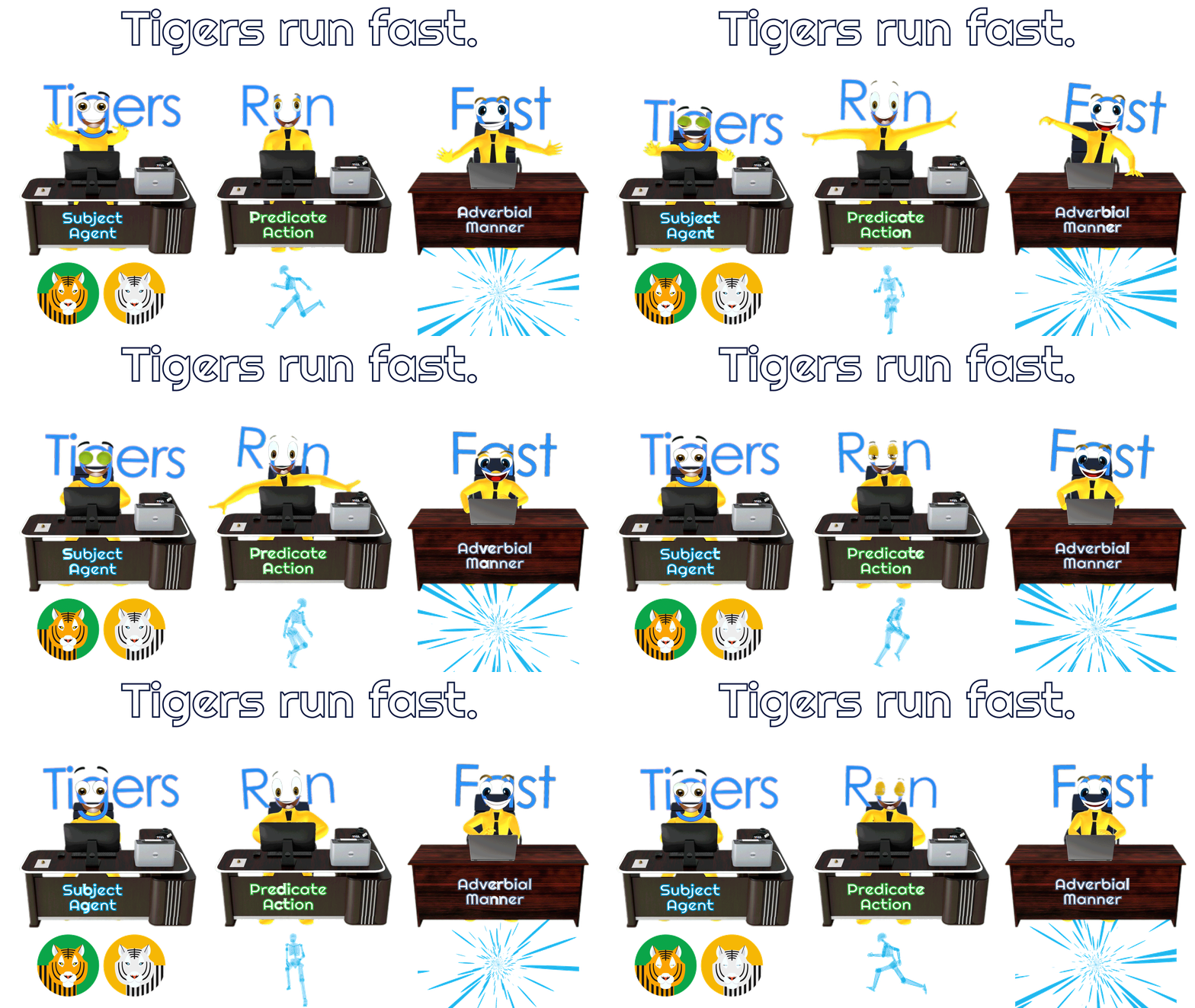
In Lexonomics, every Lexis Being enters the workplace of the sentence, a cooperative venture where each word performs a specialized career governed by syntactic rules and enriched by thematic roles to produce a semantic deliverable. A word’s role isn’t arbitrary; it is its profession. Subjects and predicates are the managers, phrasal heads are the supervisors, and together with their subordinates, these positions coordinate to build a coherent message, each contributing its expertise to the venture’s final product: understood expression.
Lexis Being Career Breakdown
1. Career Title (Syntactic Function)
In the workplace of the sentence, each Lexis Being is assigned a formal career—its syntactic job—which determines how it functions within the organizational structure of expression. Subjects and predicates act as senior supervisors overseeing the operation, while their subordinates serve as support staff who refine, clarify, or extend the venture’s workflow. Syntax governs career titles, responsibilities, and hierarchical relationships, ensuring that every worker collaborates with purposeful precision. Through these coordinated roles, the sentence becomes a structured enterprise in which each position contributes essential expertise to the construction and delivery of meaning.
Workplace Meaning (Semantic Contribution)
In the workplace of the sentence, meaning is the deliverable—the conceptual product created when each Lexis Being fulfills its assigned career. As workers collaborate across their syntactic roles and thematic responsibilities, they generate the venture’s final output: the idea, interpretation, or message the sentence conveys. Meaning is not a single worker’s job, but the coordinated contribution of all positions working in harmony to produce a unified, intelligible expression.
3. Thematic Roles (Department Responsibilities)
Thematic roles describe the collective responsibilities of entire sentence-departments, defining what each group of Lexis Beings contributes to the event the sentence expresses. While syntactic careers assign individual job titles, thematic roles illuminate the function of whole divisions—whether initiating action, undergoing change, perceiving experiences, providing tools, or specifying destinations. These roles outline the conceptual responsibilities that guide how meaning is constructed, turning the sentence into a coordinated workplace where departments collaborate to produce a coherent semantic outcome.
4. Sentence as a Co-Op Venture (Workplace Equity)
A sentence functions as a collaborative enterprise—a linguistic co-op—where Lexis Beings work collectively to accomplish a communicative task. Within this shared venture, workers coordinate responsibilities, exchange information, and execute operations that blend structure, meaning, and function into a unified deliverable. The effectiveness of the message depends on synergy: how precisely each role aligns with its departmental responsibilities, how fluently workers interact across the syntactic hierarchy, and how seamlessly their thematic contributions converge. When the workplace runs smoothly, the sentence succeeds in producing its final product—clear, coherent, and purposeful expression.
Matters
The importance of the LexiVerse centers on its transformation of the vast, abstract landscape of linguistics into a mnemonic memory palace—one where every concept is personified, storied, and unforgettable. By turning sounds, structures, meanings, and word-relationships into living characters and cosmological systems, it makes the full spectrum of linguistic phenomena emotionally relatable and conceptually graspable. This narrative universe becomes the imaginative bedrock of K2theL, anchoring all edutainment resources within a coherent symbolic world. Through the LexiVerse, language instruction becomes not merely systematic and scientific, but cinematic, memorable, and alive—ensuring that learners don’t simply study language, they remember it, inhabit it, and carry it with them across every learning experience.
Why the

Phonogramic Phonics is K2theL’s micro-lexical, structural decoding, pedagogical approach — a scientifically grounded, linguistically precise phonics teaching model that unifies graphemes and phonemes through systematic mapping, visual logic, and phonetic notation. Rather than teaching letters or sounds in isolation, it reveals the architectural pairing that makes written language readable: the phonogram. By mapping hundreds of grapheme–phoneme correspondences and integrating phonetic notation within a dynamic visual framework, Phonogramic Phonics transforms decoding into conceptual insight. Learners don’t merely memorize sounds — they internalize the structural blueprint that governs how words are built, spoken, and transformed.
Breakdown
What is a Phonogram?
The pairing of a graphemic component with a phonemic component, which represents the occurrence of language sounds signified by written letters.

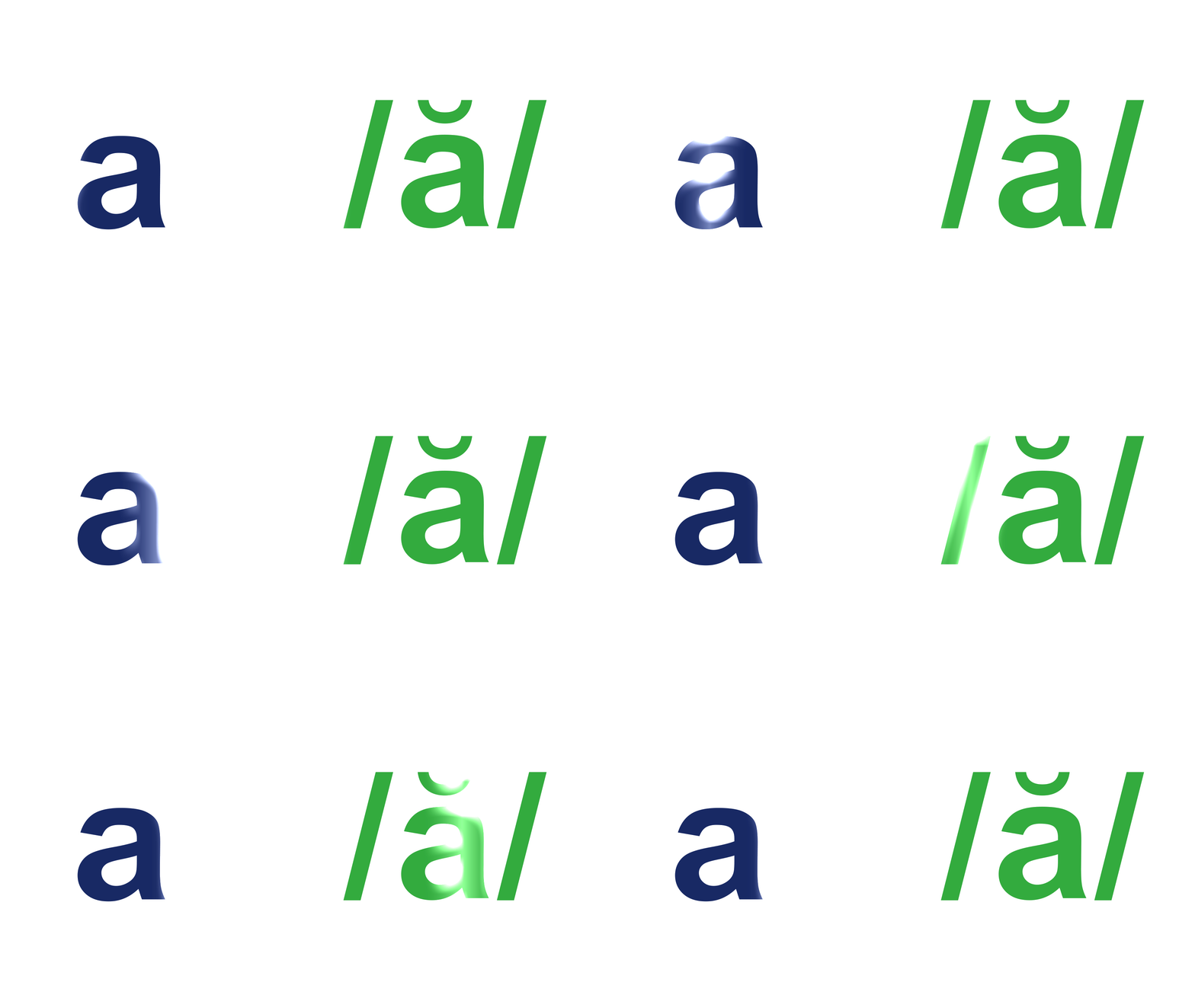
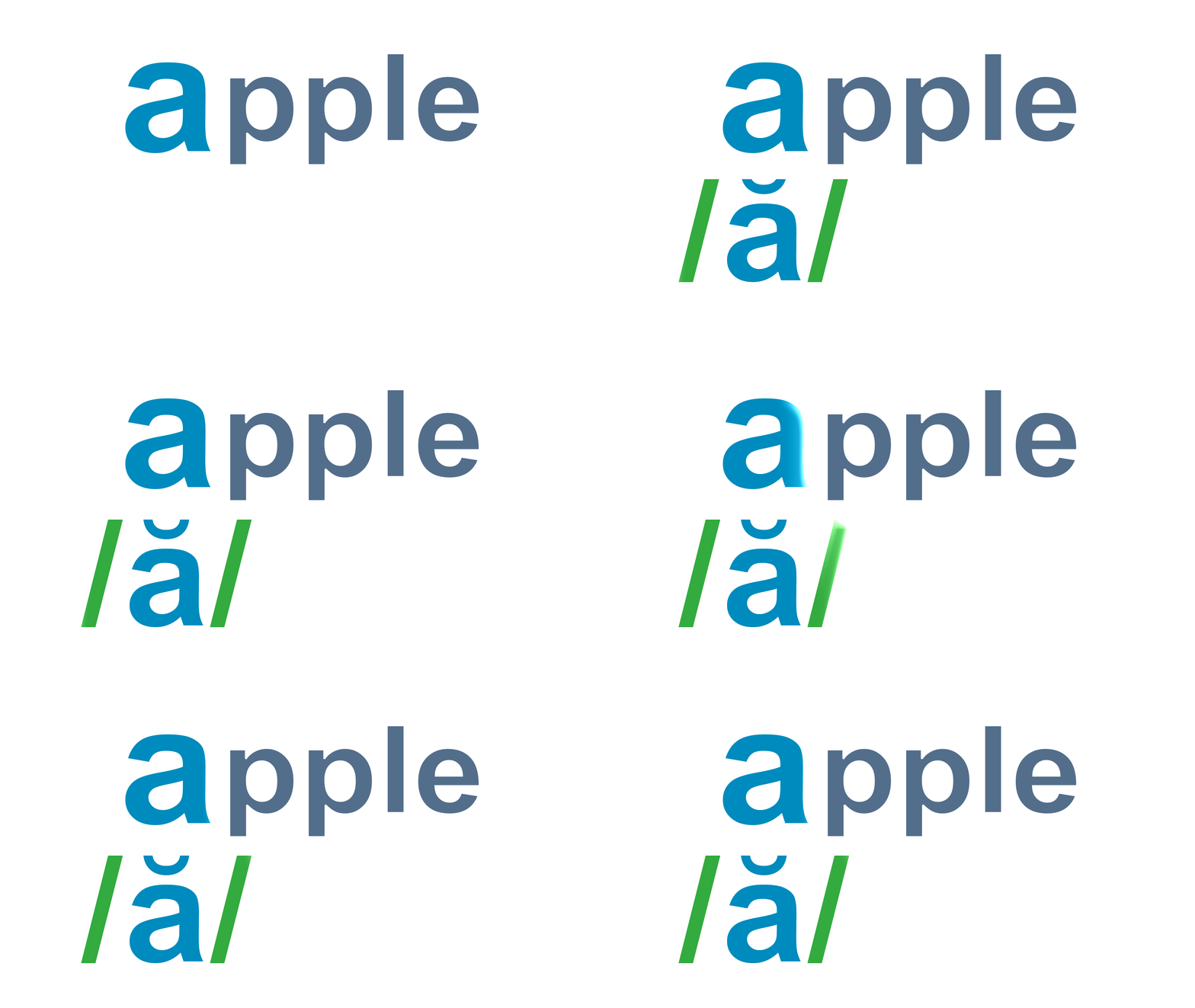
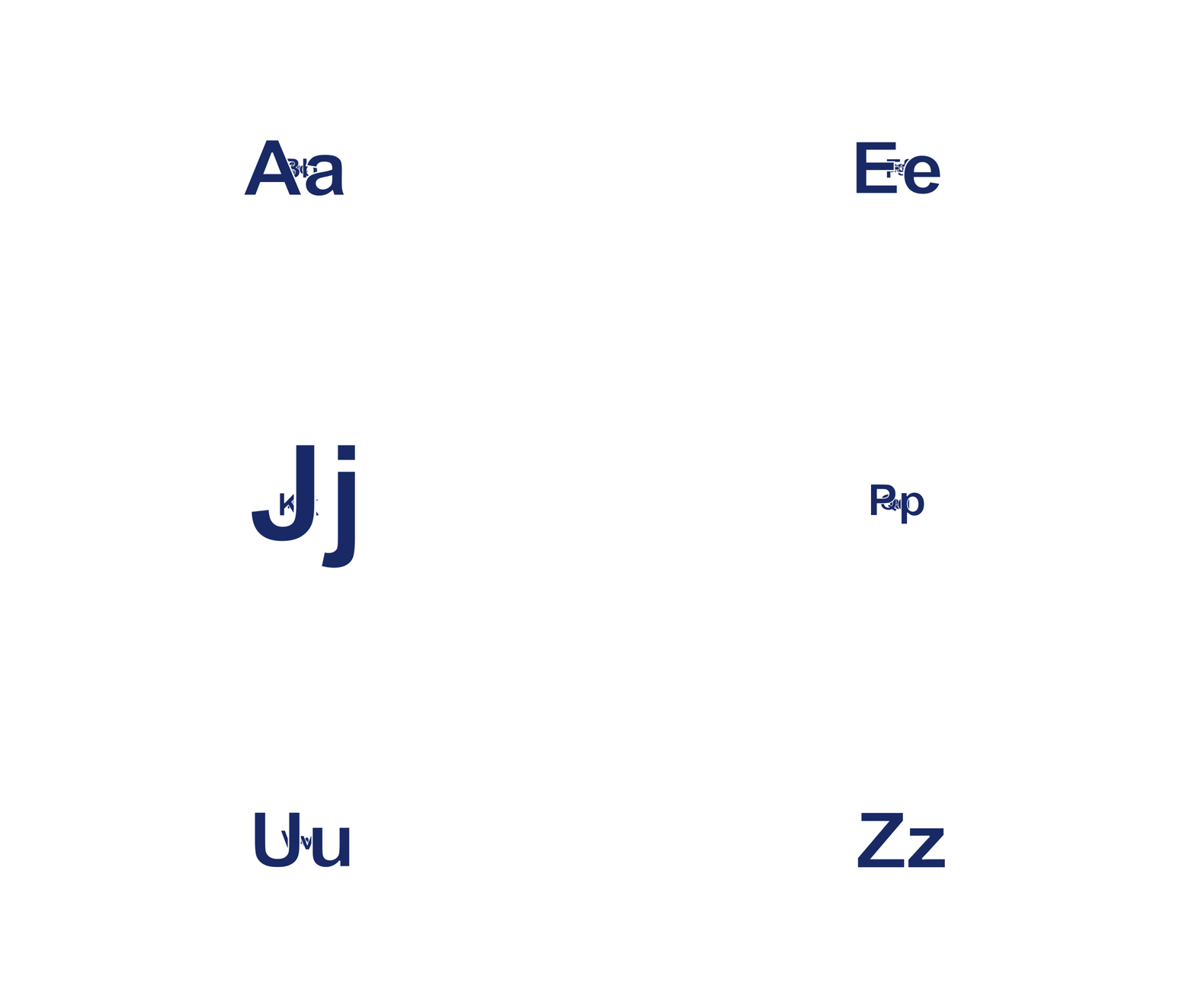
Graphemic Components (GCs)
The visual representation of a phonogram, which can be a single grapheme (written letter) or a group of graphemes.
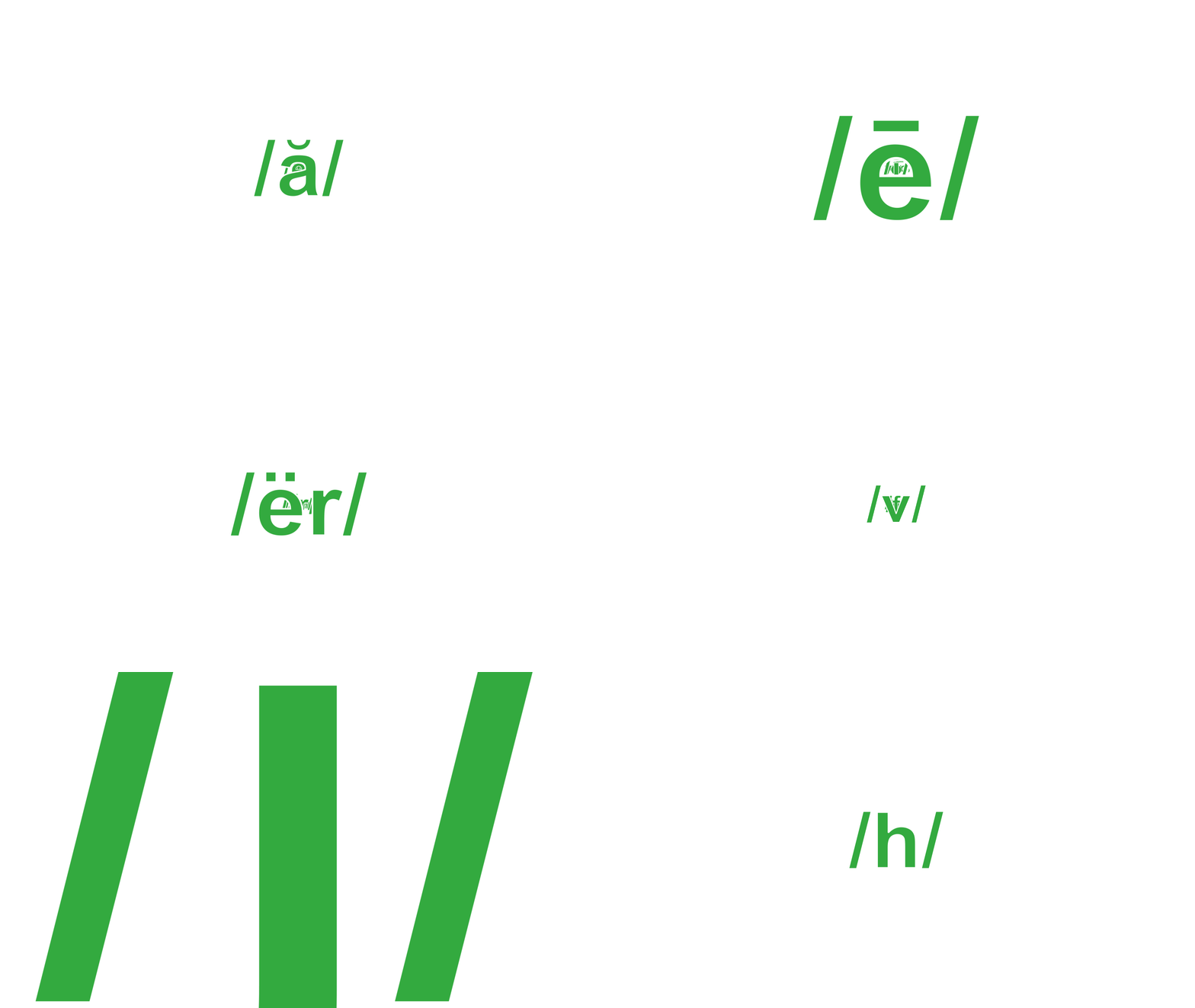
Phonemic Components (PCs)
The audial representation of a phonogram, which can be a single phoneme (spoken language sound) or rarely a group of phonemes.
Graphemic Component Types
Classification of the GC of phonograms based on number of letters.
Phonemic Components Types
Classification of the PC of phonograms based on phonemic behavior.

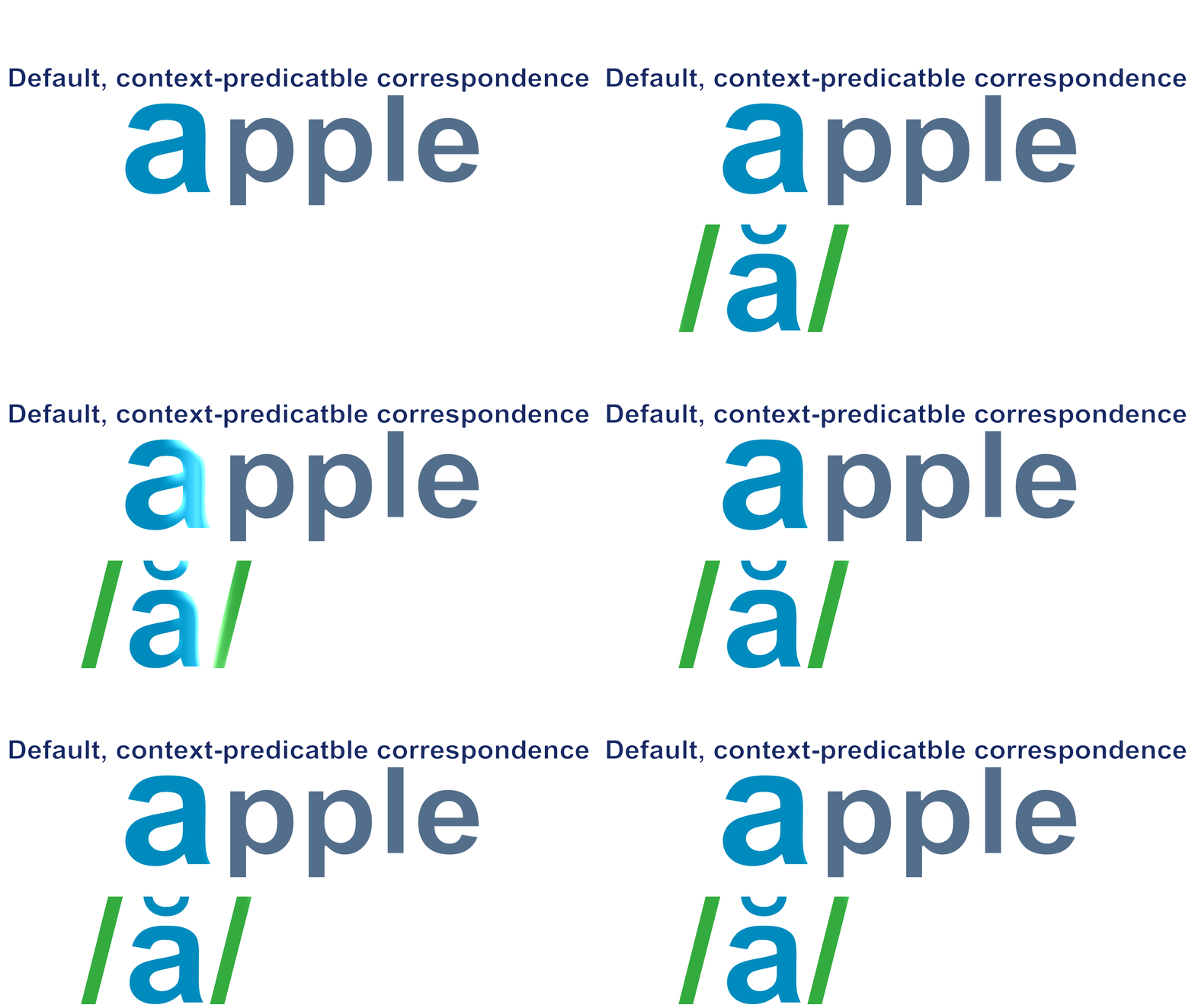
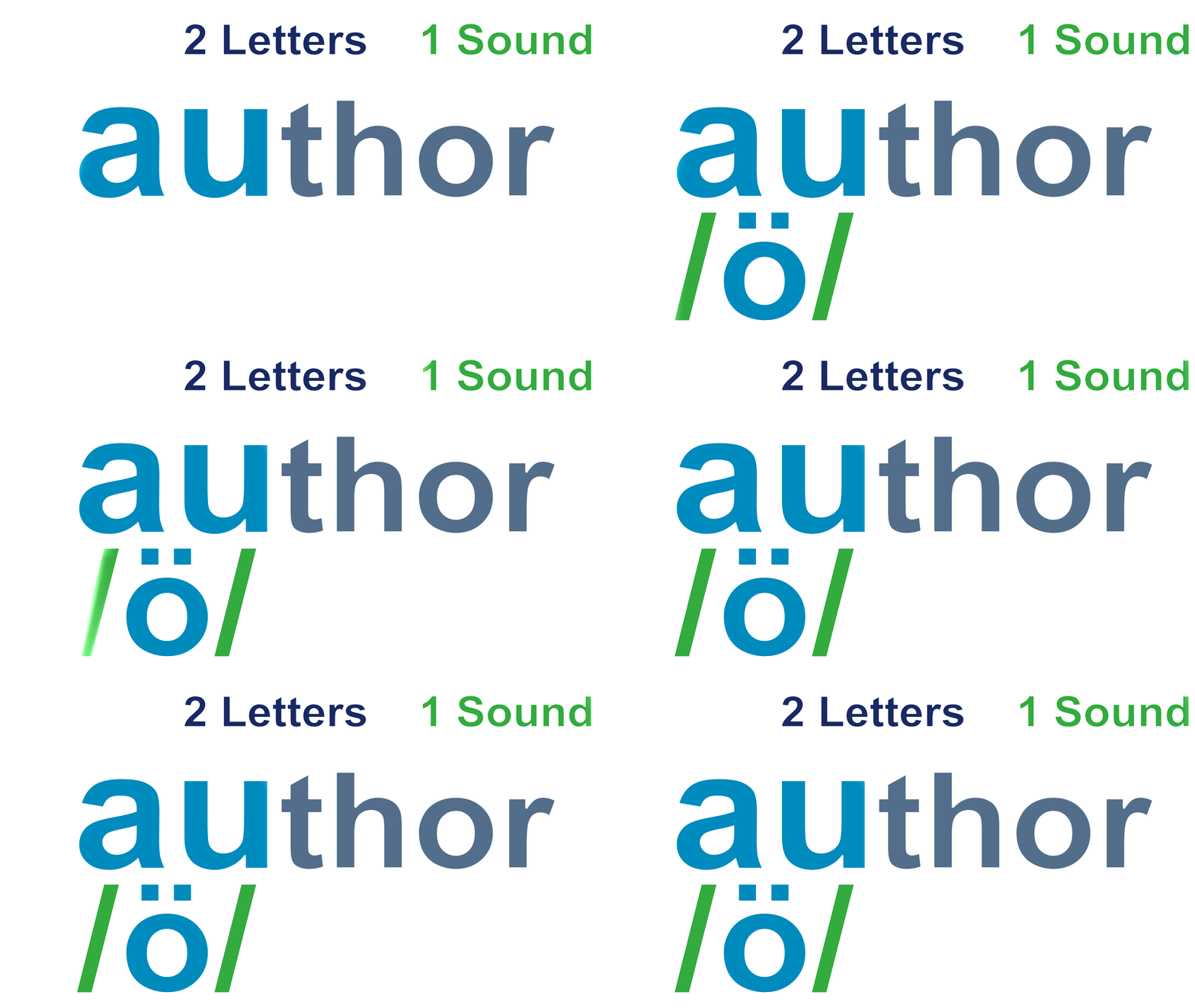
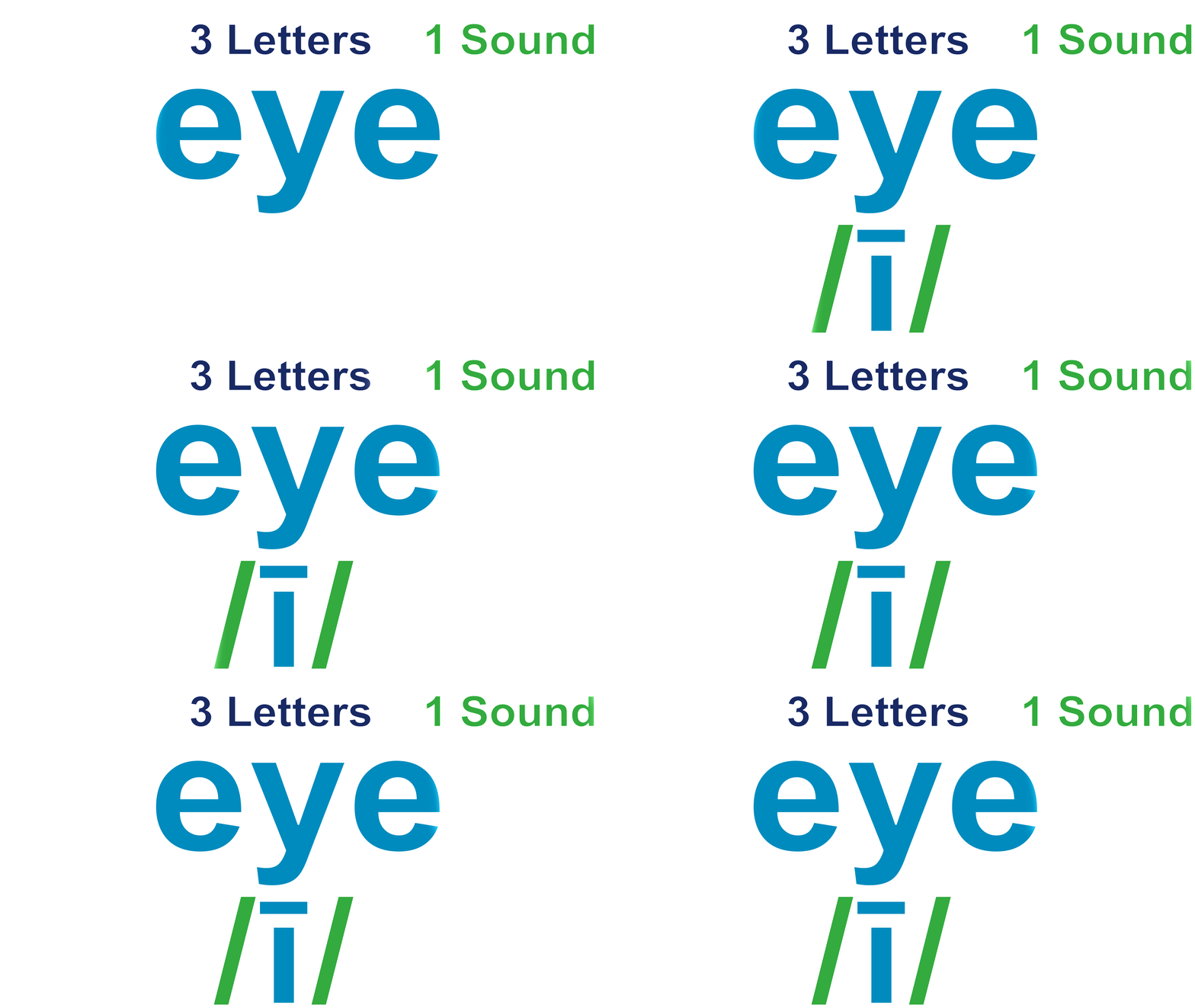
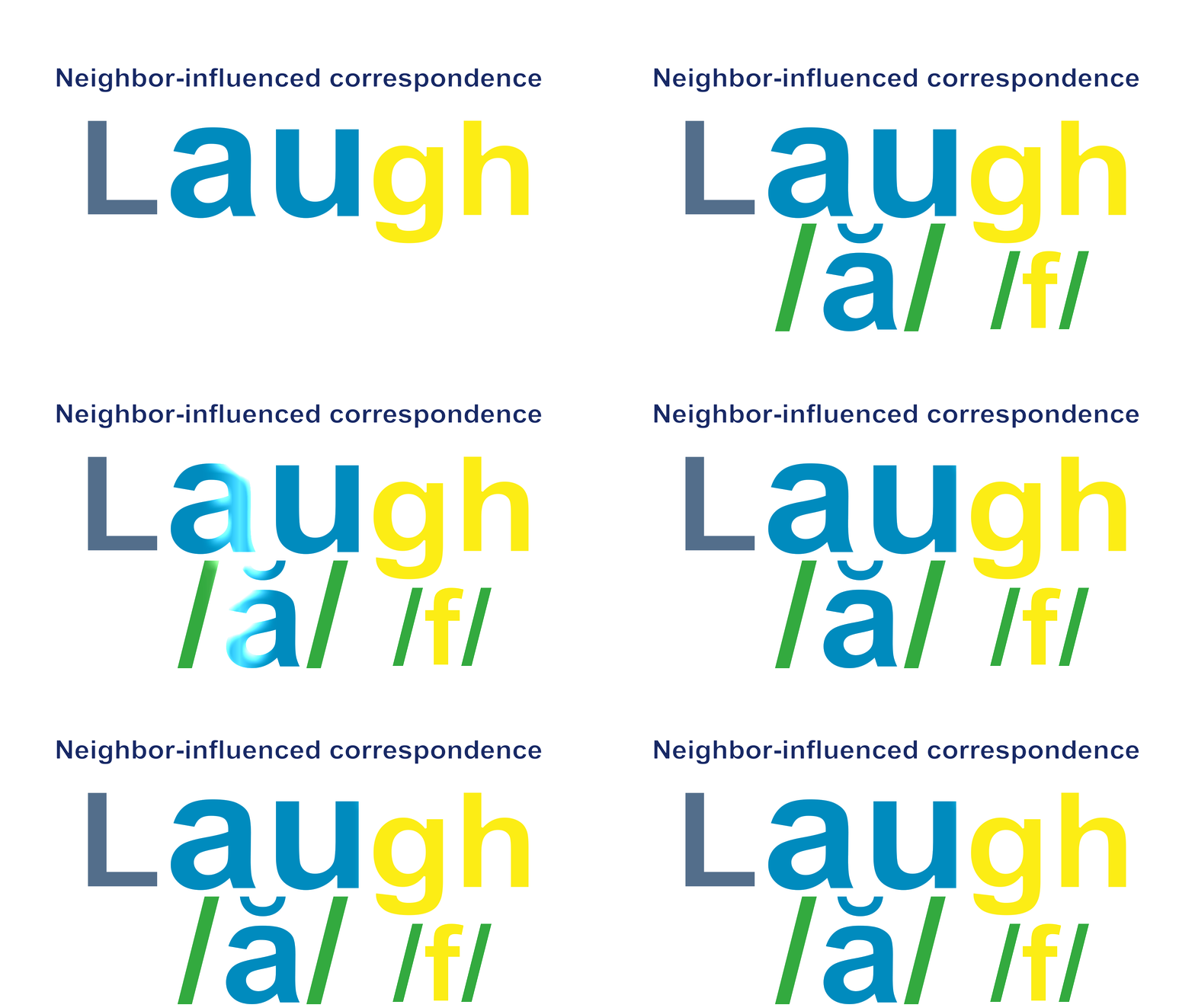
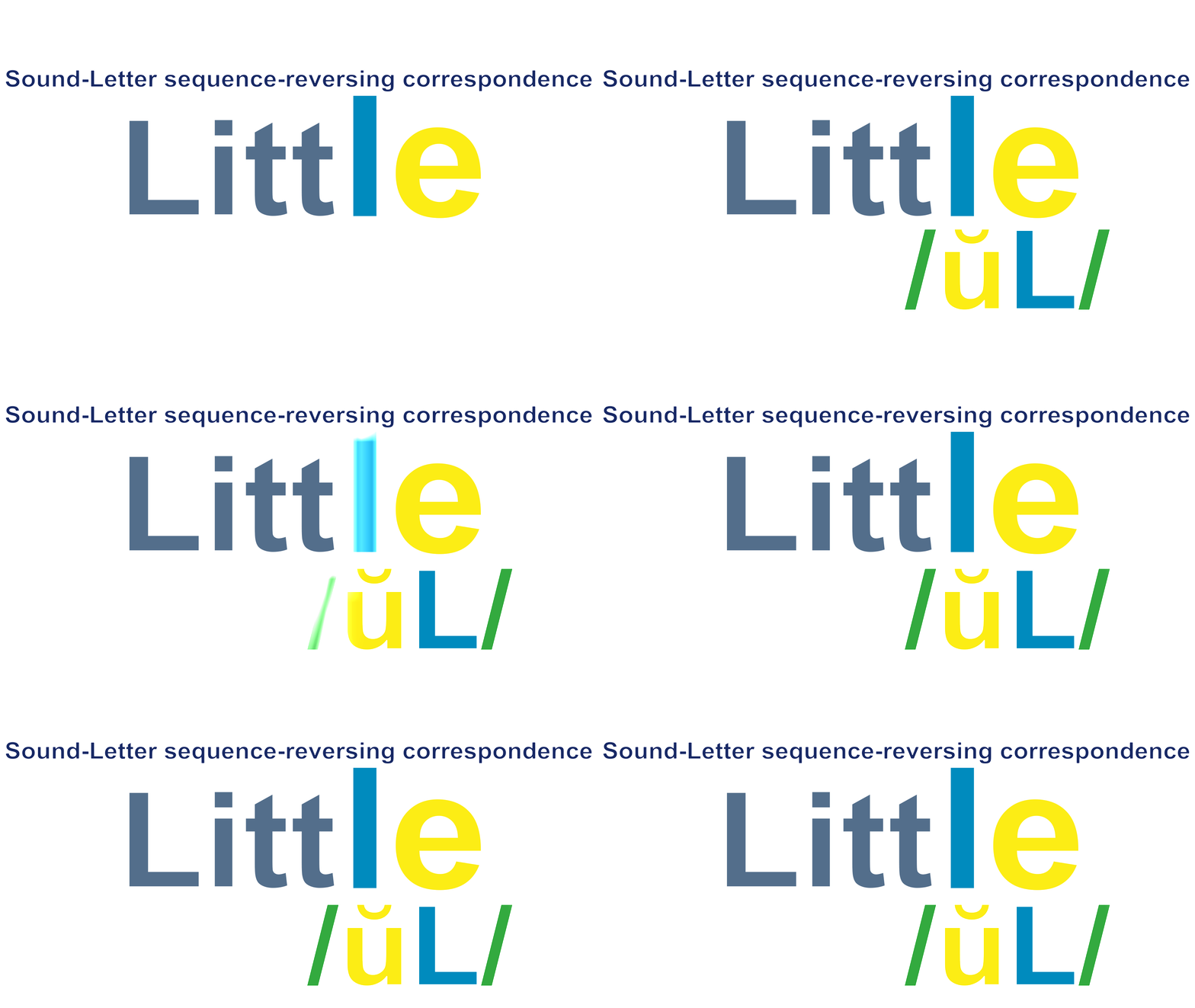
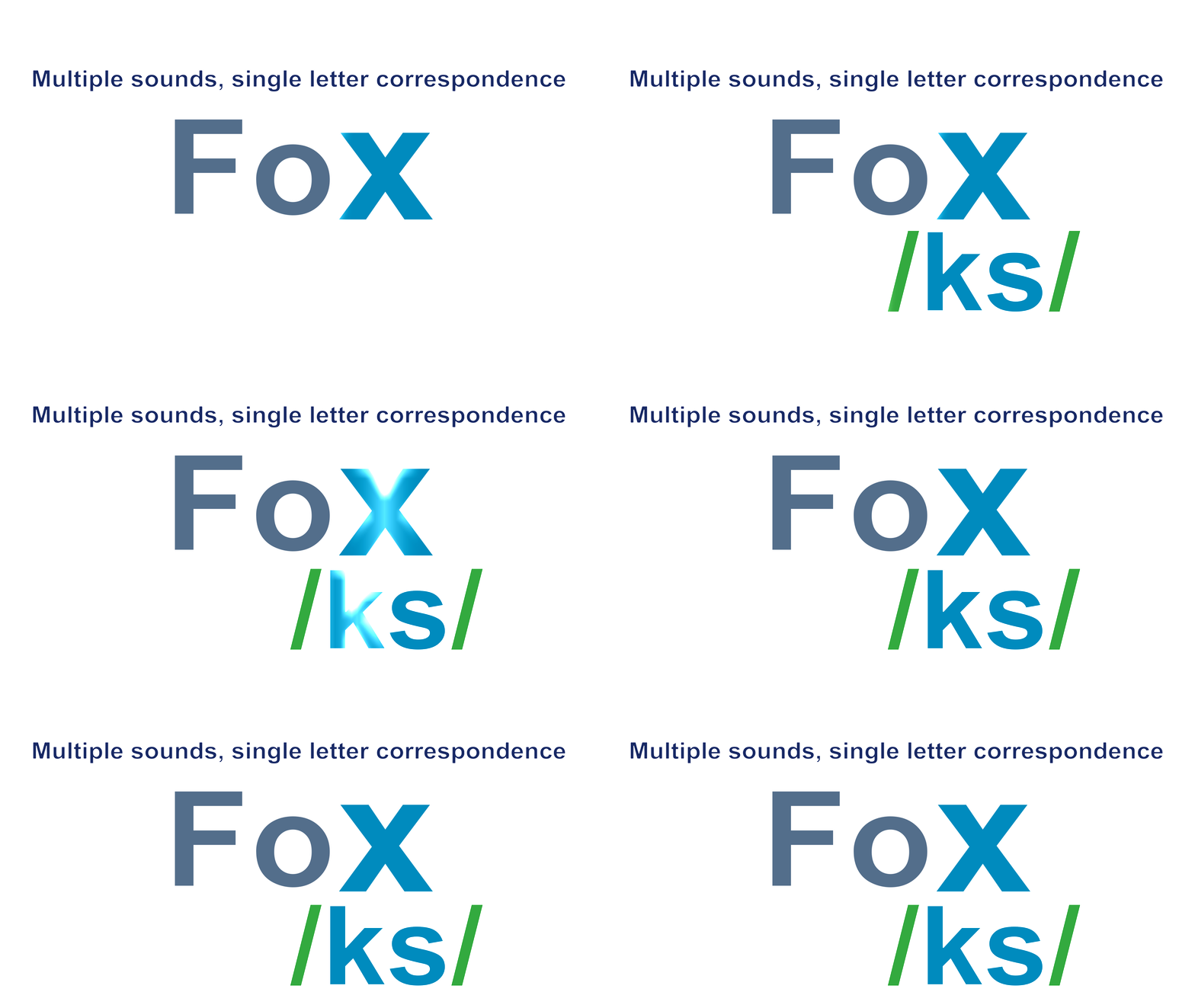
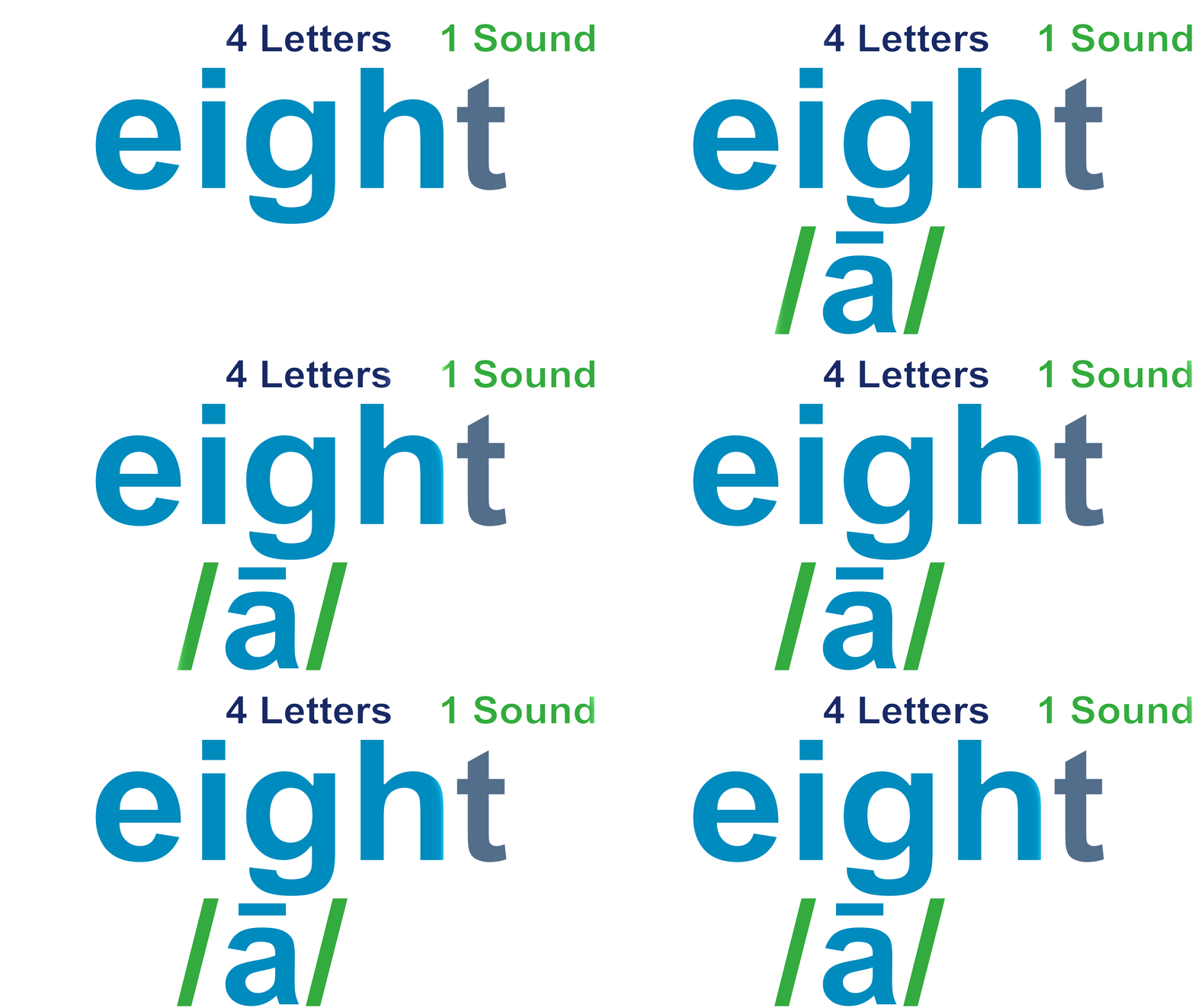
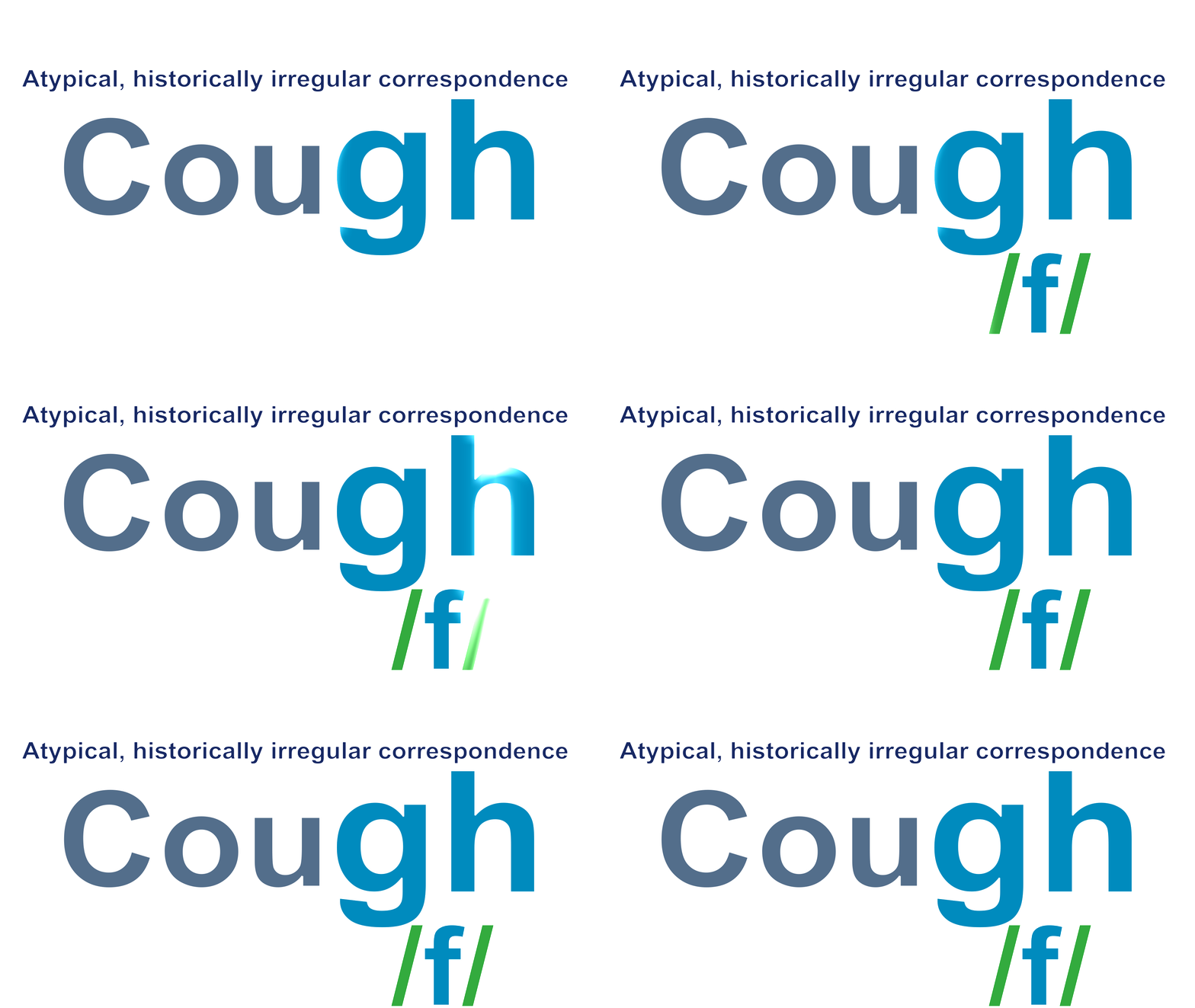
Graphemic Prime (GP) & Graphemic Prime Variants (GPV)
A GP is the root letter that anchors a series of GPVs, which are all graphemic components derived from that same root.

Phonemic Correspondences for Graphemic Prime Variants (PCGPV)
All phoneme–grapheme correspondences for a GP's full variant set.
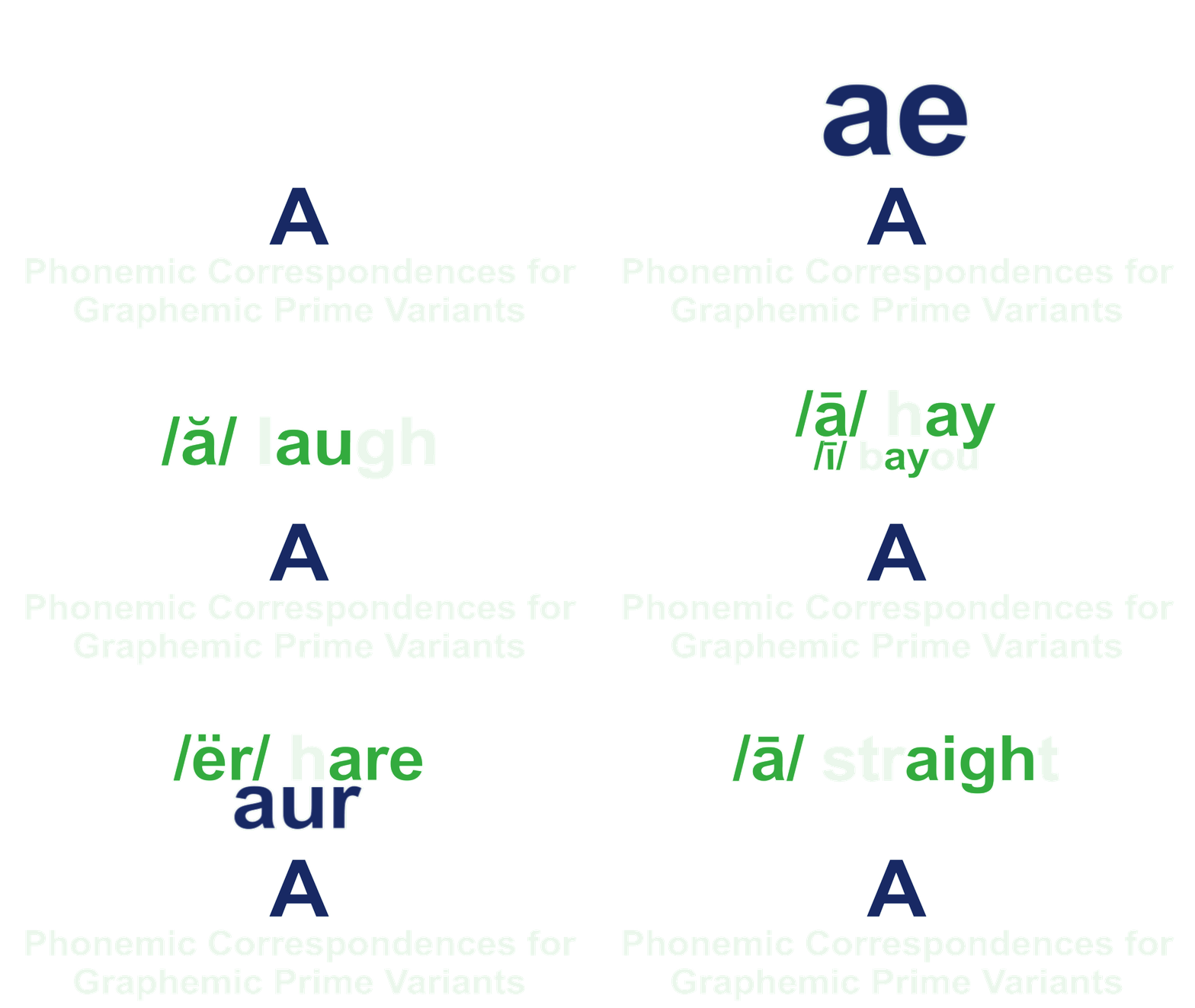
Phonogramic Phonics: Key Stats
-
26 Graphemes — the full alphabet, including 6 vowel graphemes and 21 consonant graphemes (with Y functioning as both).
-
45 Phonemes — 24 consonant phonemes and 21 vowel phonemes mapped across English speech.
-
150+ Graphemic Prime Variants (GPVs) — all the graphemic forms derived from the 26 Graphemic Primes.
-
260+ Phonemic Correspondences for Graphemic Prime Variants (PCGPVs) — the complete set of phonogramic pairings between GPVs and their phonemic components.
Matters
Why
Phonogramic Phonics brings clarity to English by mapping the direct relationships between letters and the sounds they unlock. Through its system of Graphemic Primes, their Variants, and the full network of Phonemic Correspondences, this approach gives students a clear, reliable structure for decoding and understanding written language. For educators, it serves as a powerful instructional model and professional development tool — strengthening teacher knowledge, guiding lesson design, and making phonics instruction more precise and intentional. The framework is supported by comprehensive resource charts that visually outline every correspondence in the system, offering an accessible reference for both teaching and learning. Phonogramic Phonics transforms complexity into clarity, empowering students and elevating instruction.
LexCinematics is the vocabulary-retention model of K2theL — a multimodal storytelling framework that transforms definitions into vivid, emotionally resonant visual narratives. It fuses structural and meaning-based elements, most notably semantics and etymology, with visual-effects techniques such as animation and motion graphics to enhance character performance and symbolic imagery. Through mnemonic story arcs, metaphor-rich scenes, and character-driven demonstrations, LexCinematics turns nuanced lexical concepts into experiences learners can see, hear, and remember. In this system, every word becomes a cinematic event—memorable, meaningful, and magnetically engaging.
Overview
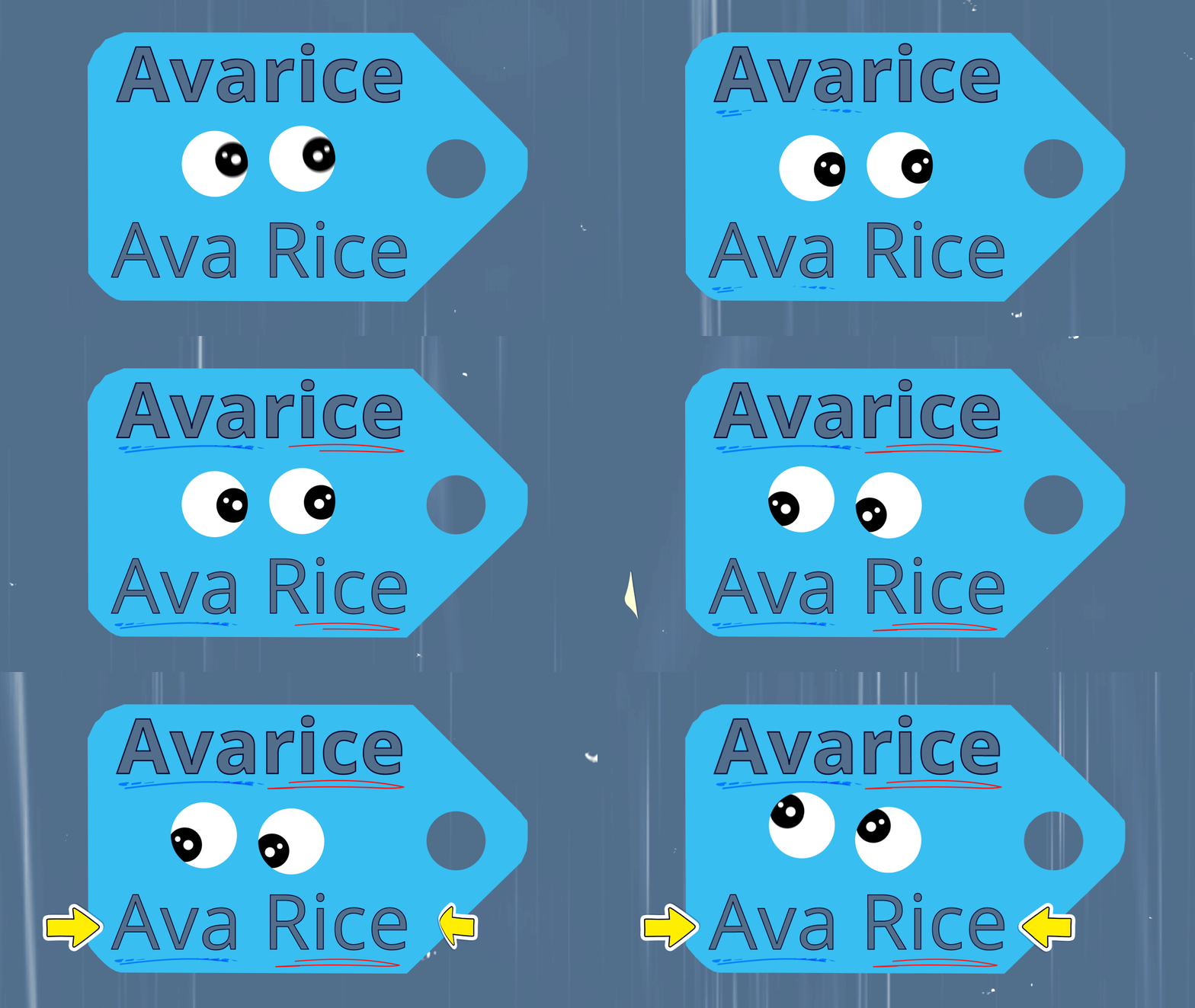
Every LexCinema begins with a LexTag—a memorable phonetic or visual association that captures the sound or essence of the target word.
LexTags use substitution techniques (“looks like,” “sounds like”) to build an instant mental hook that anchors word recall. This mnemonic seed becomes the foundation for the visual narrative, the emotional tone, and the memory palace within which the word will live.

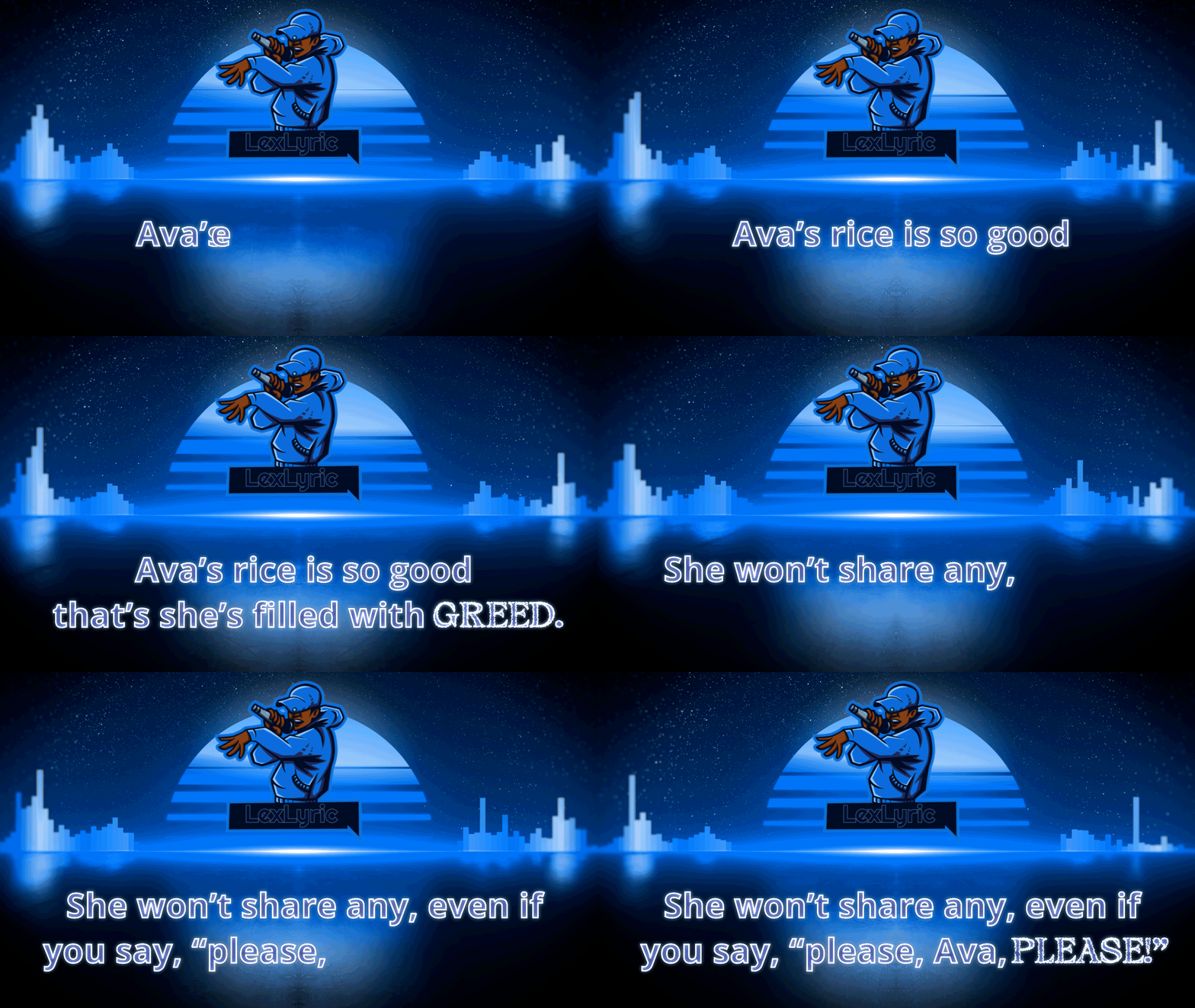
The LexLyric transforms the word’s meaning into a rhythmic, rhymed verse that reinforces retention through cadence and repetition.
These short, punchy lyrical lines encapsulate the definition and emotional resonance of the word. When combined with music, call-and-response patterns, and performance elements, LexLyrics become an auditory mnemonic that strengthens recall through rhythm and expressive delivery.
LexCinematics encodes meaning through metaphor-rich imagery, exaggeration, character performance, and symbolic visual cues.
Meaning becomes tangible as abstract concepts are reborn as visceral scenes that spark emotional connection and anchor memory through visual narrative logic.

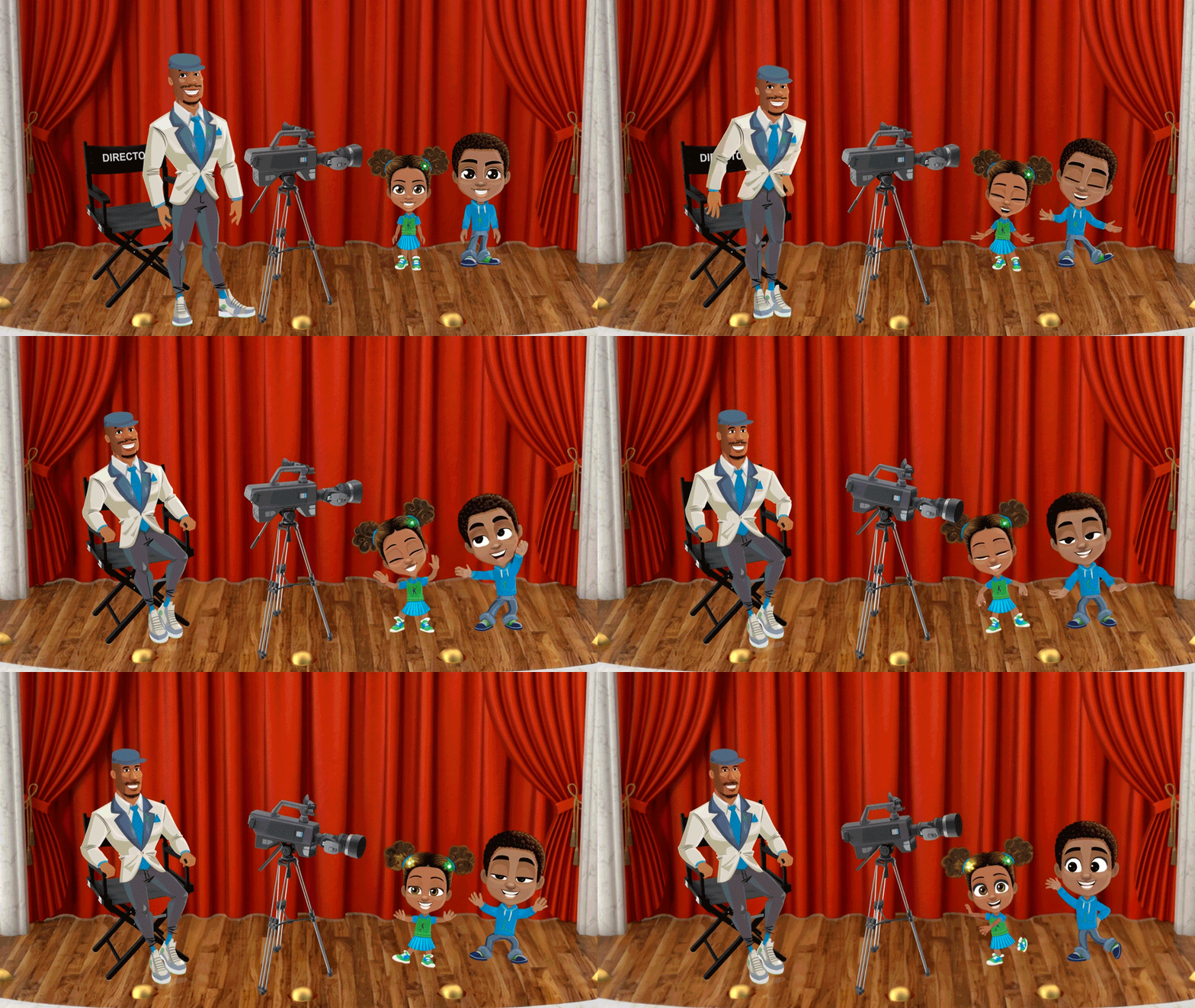
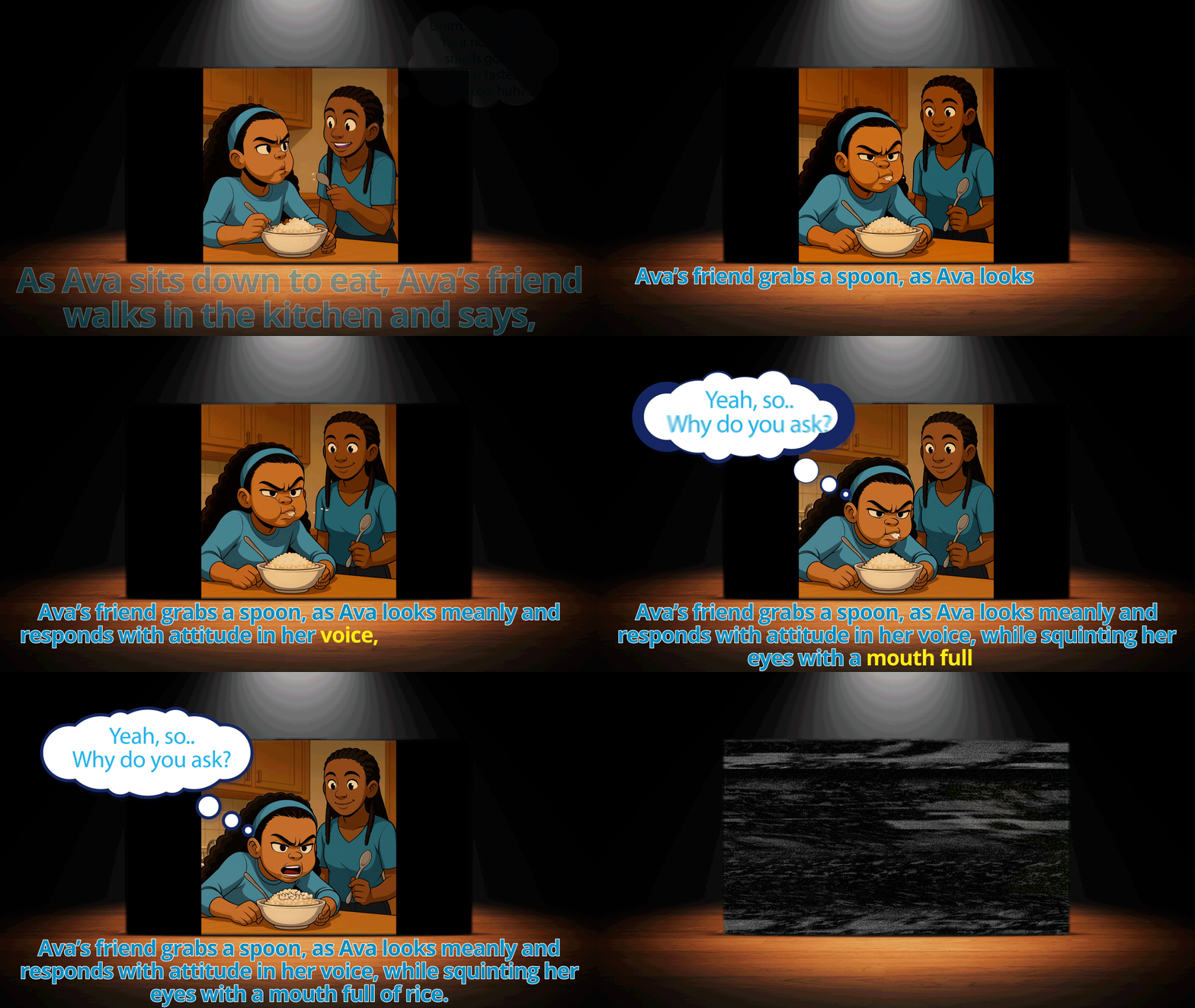
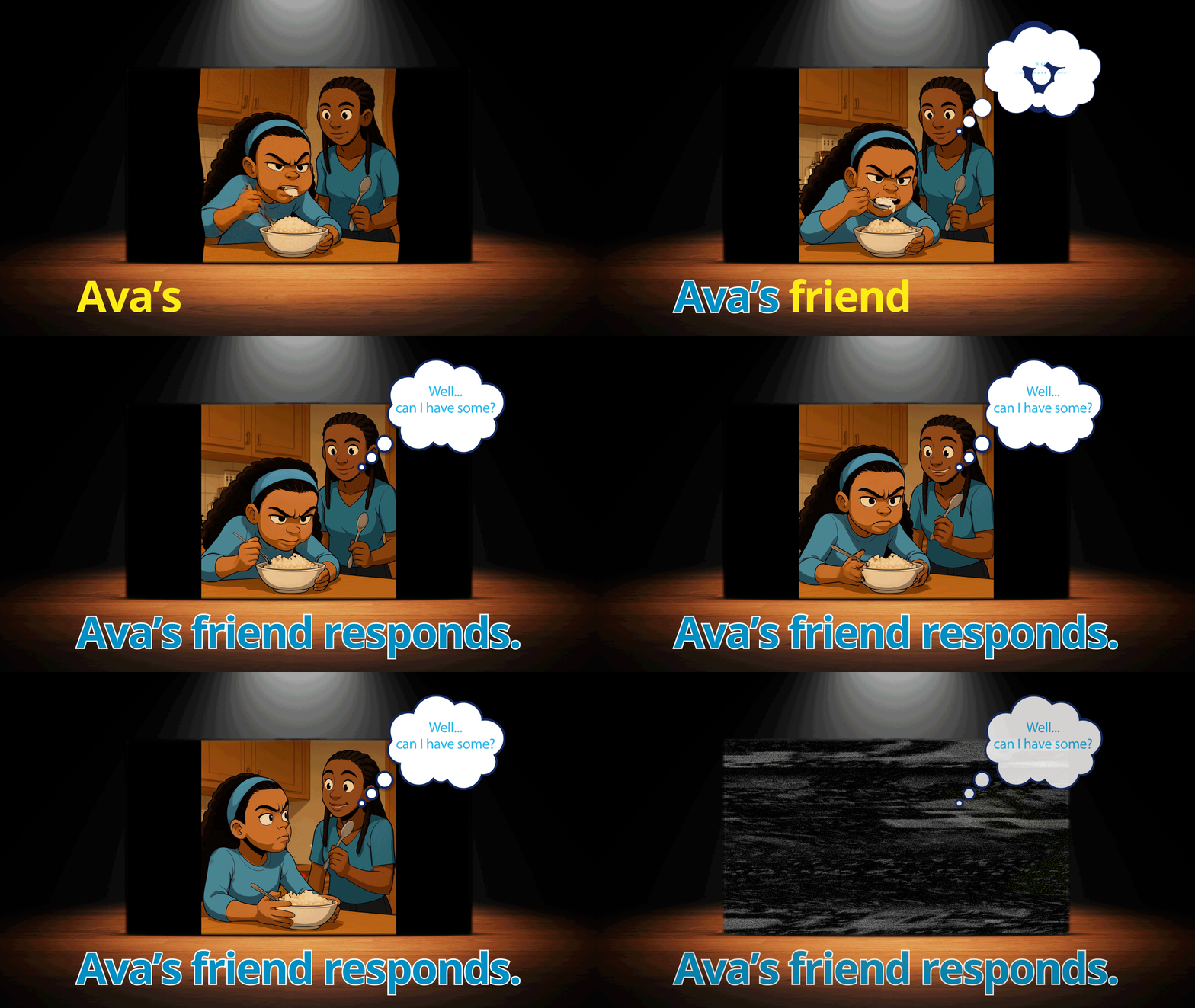
Each LexCinema unfolds as a micro-drama, bringing vocabulary to life through action, conflict, character intention, and emotional stakes.
This theatrical structure turns each word into an experiential story: a script, a conflict, a climax, and a resolution that reveal the word’s conceptual essence. Performance transforms definition into lived experience—something the learner has “felt,” not just read.
LexCinema Highlight

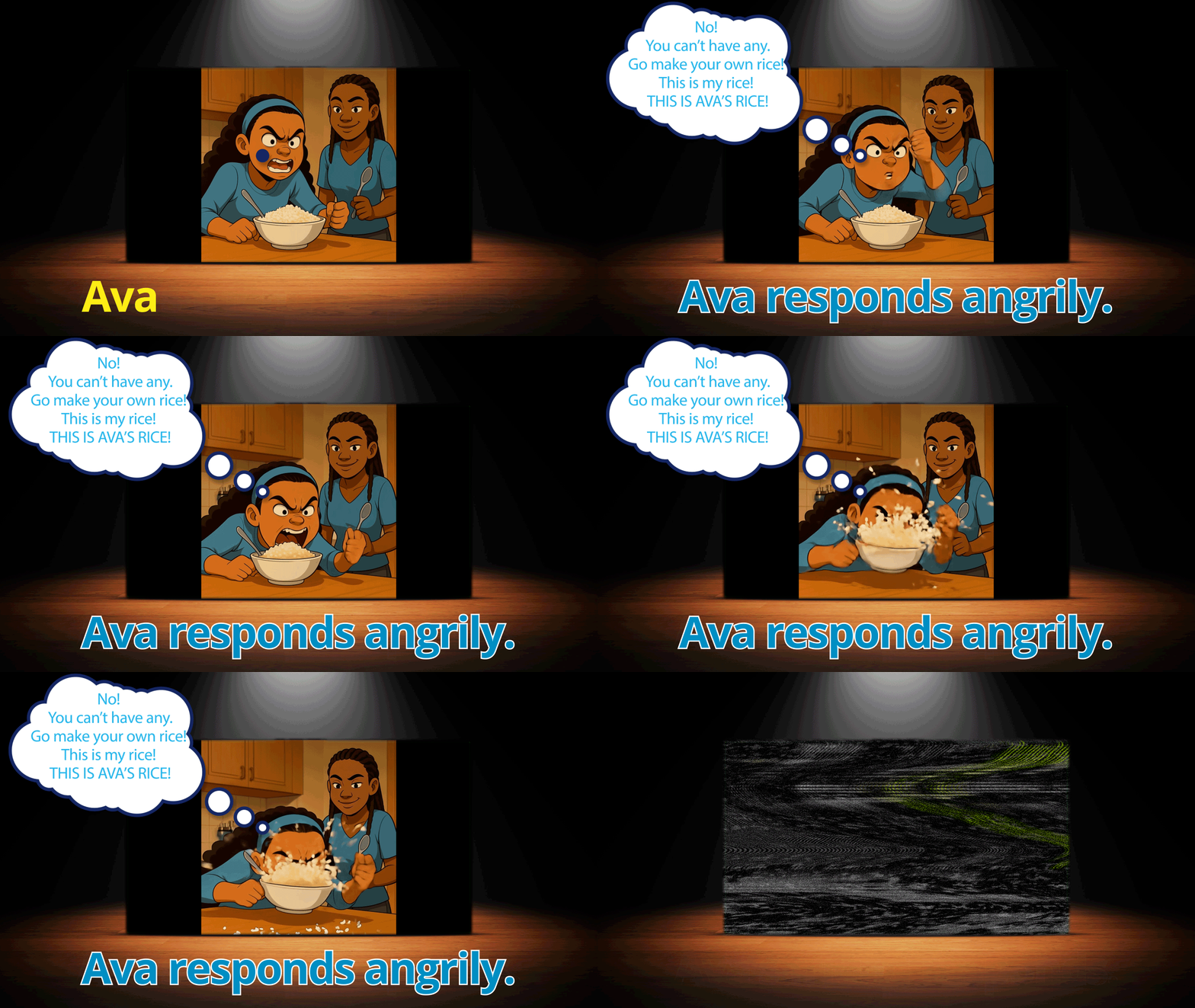
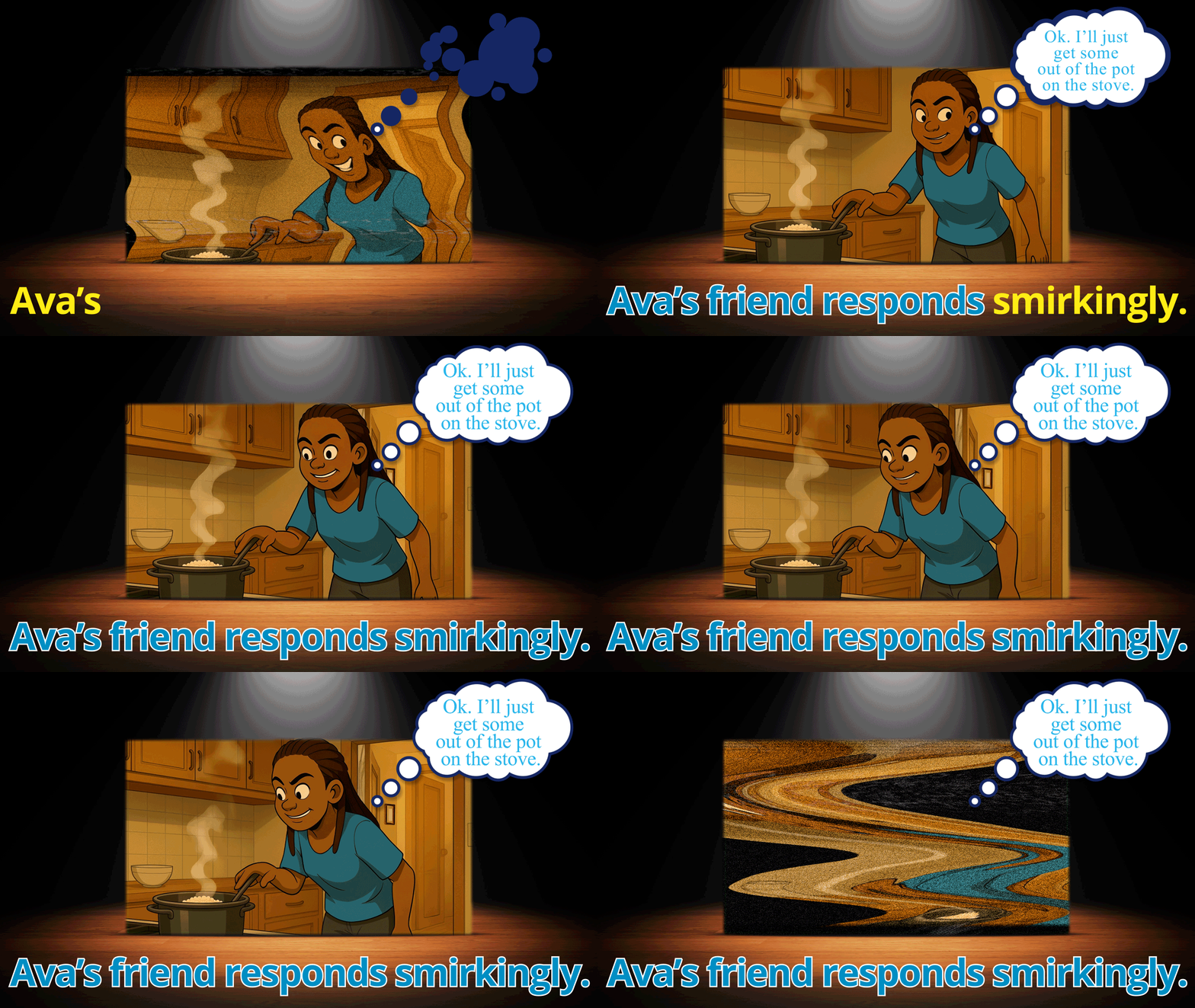
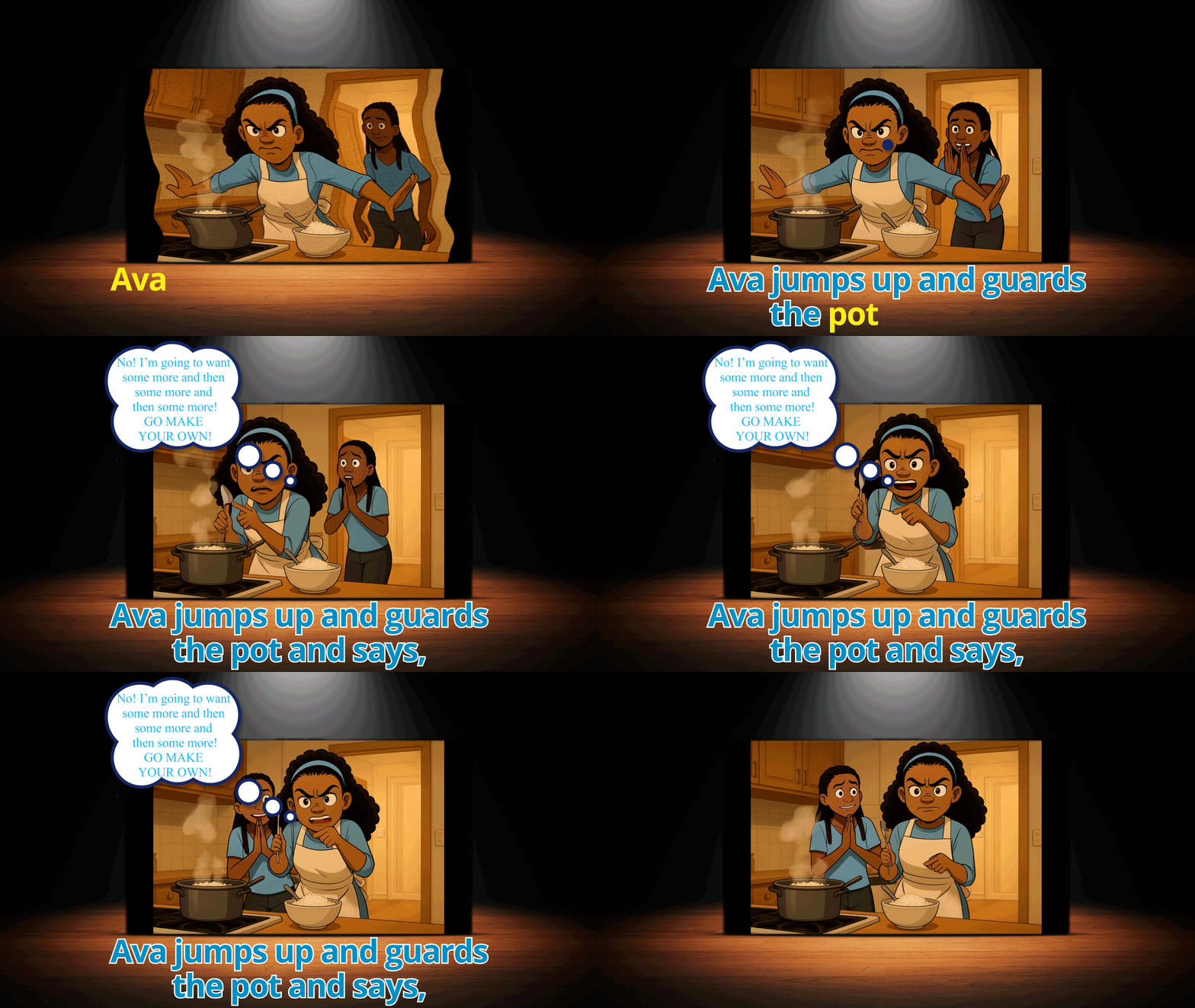
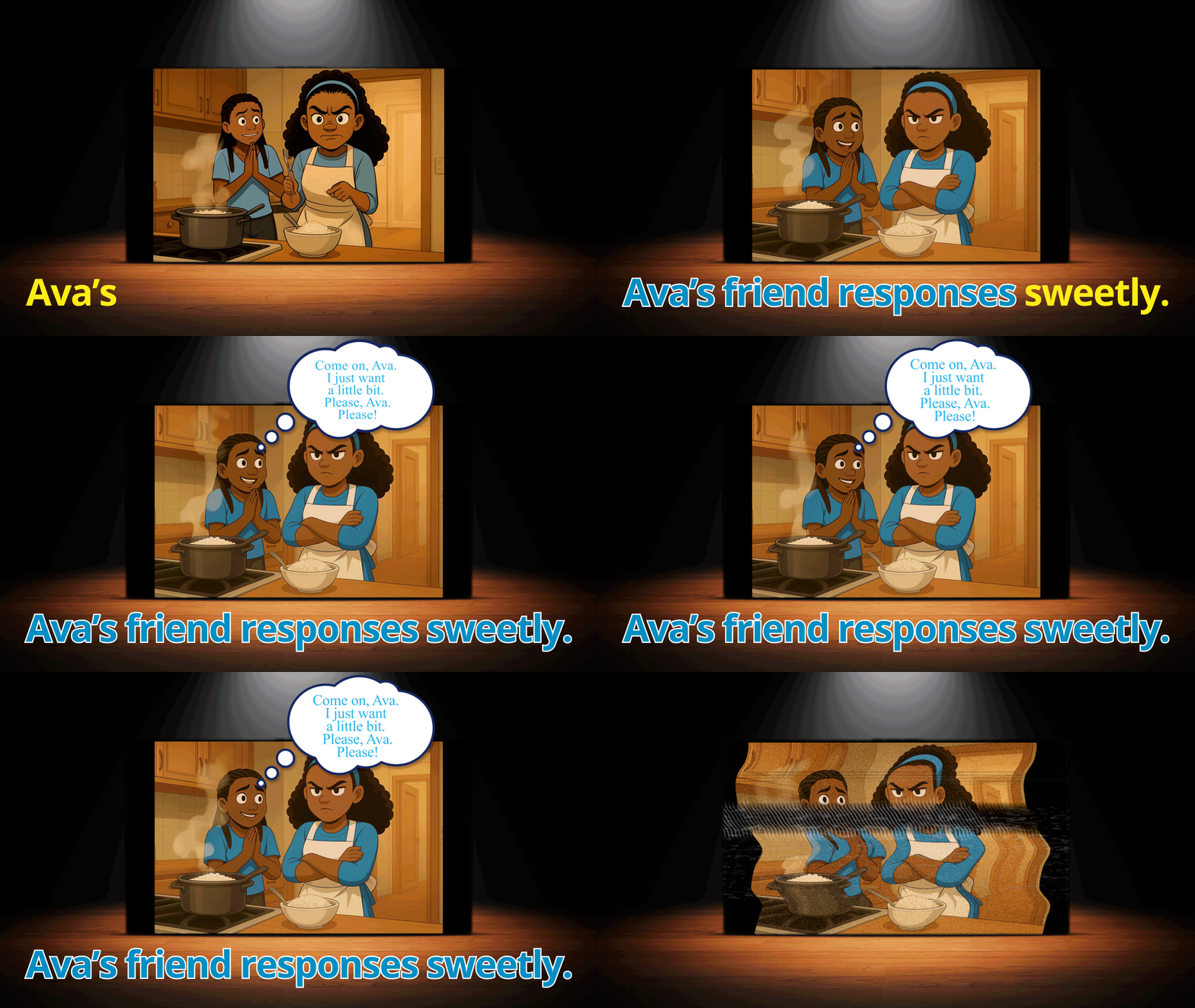
Avarice = Greed
Avarice LexTag
Avarice LexLyric
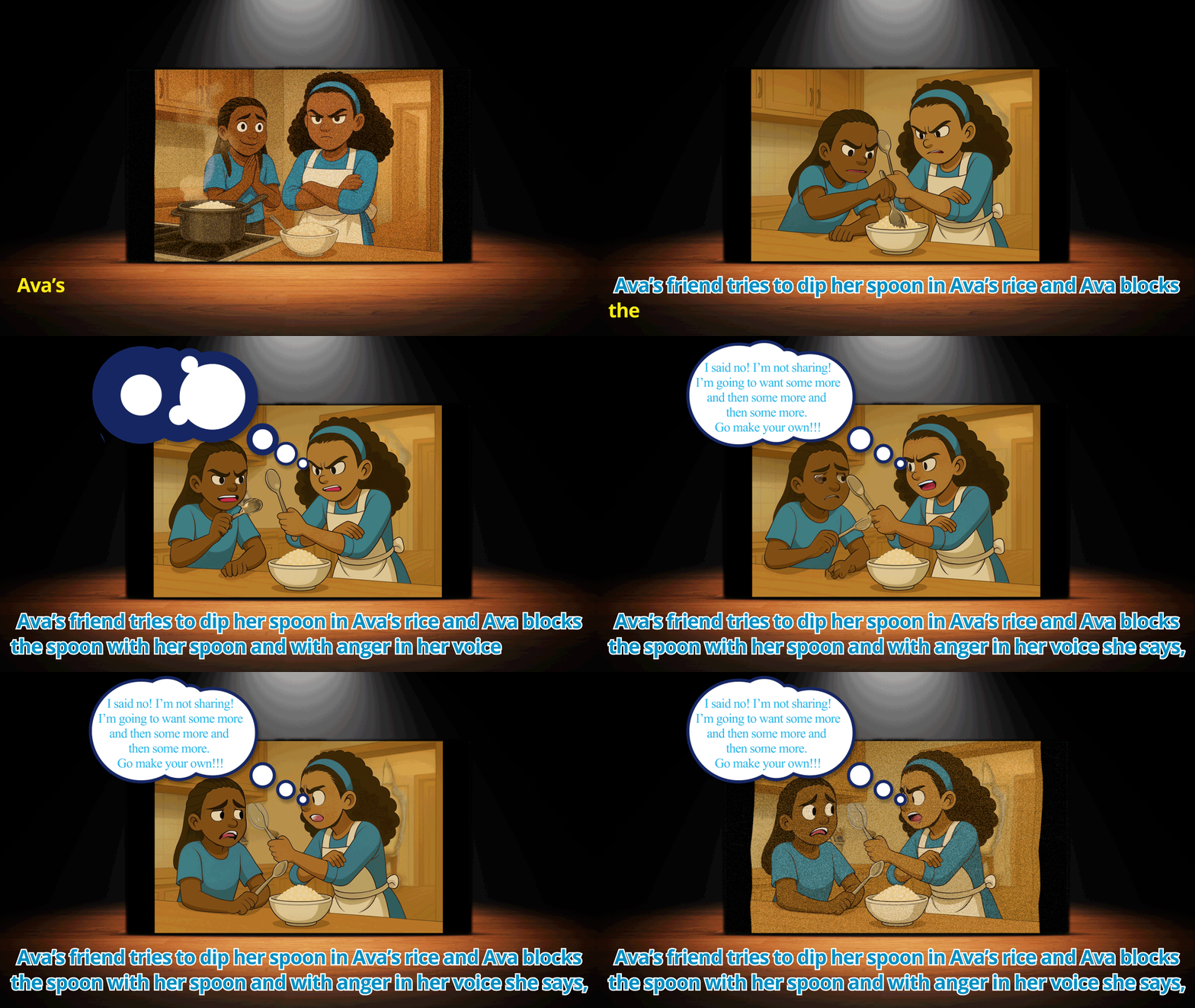
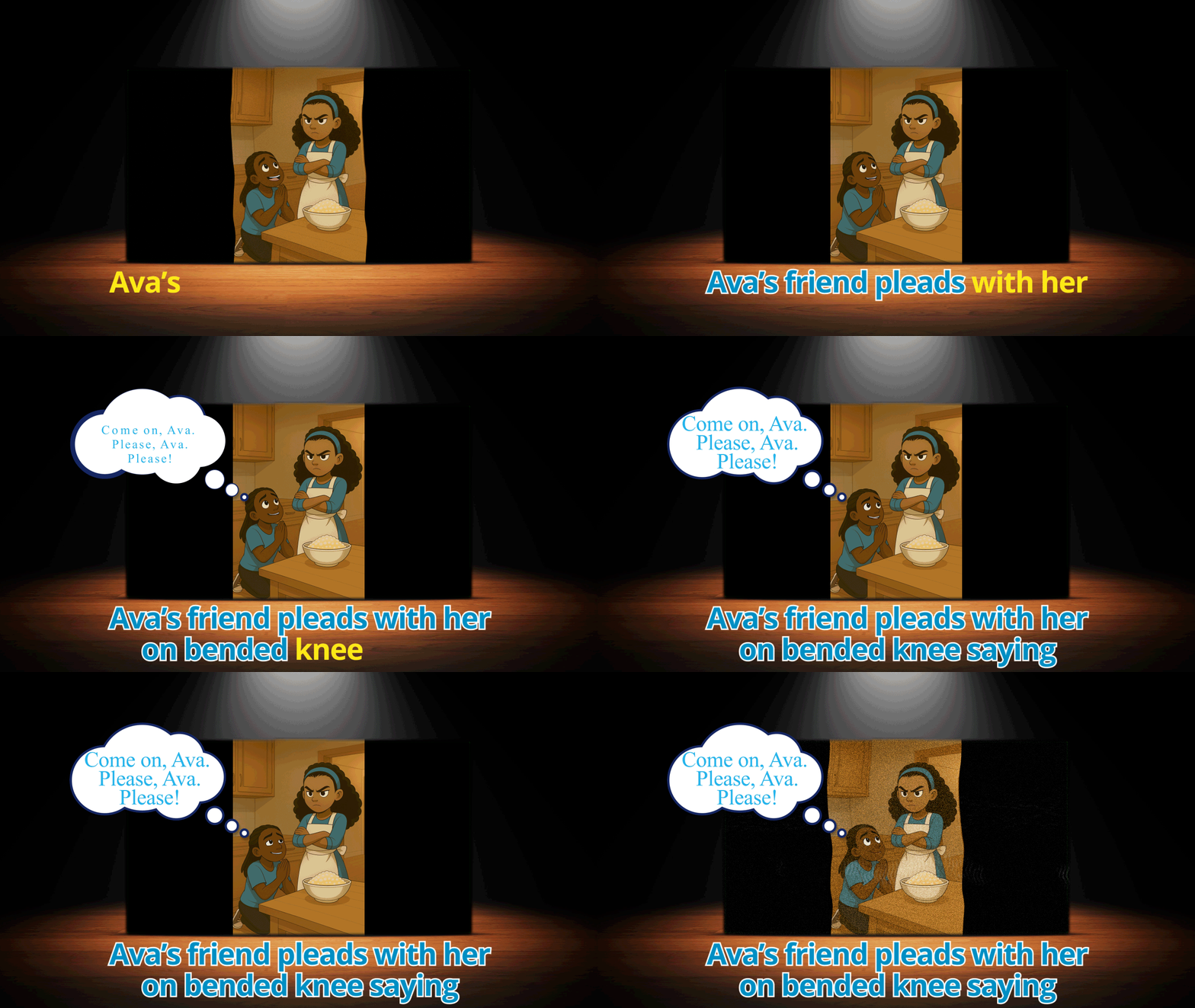
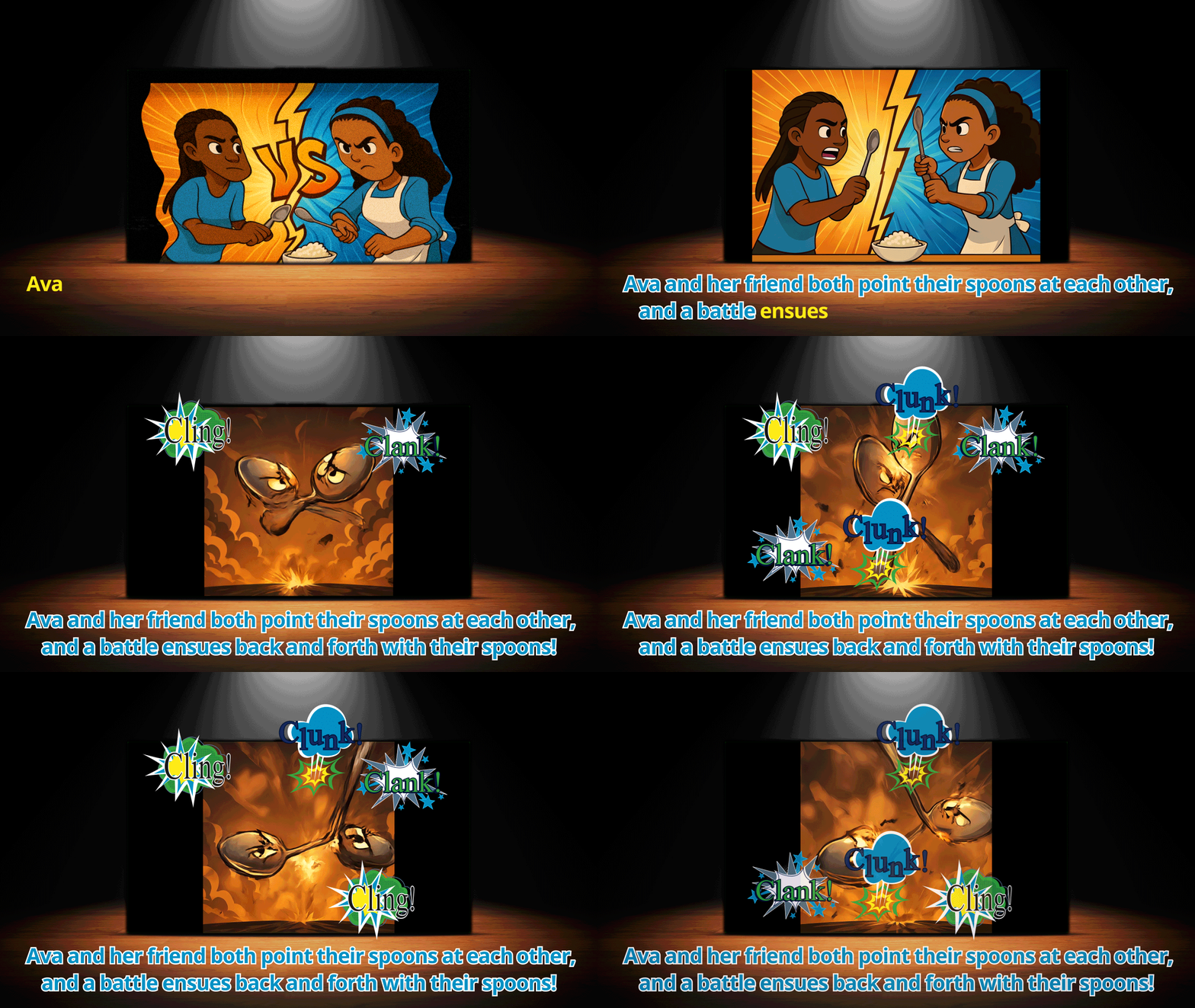
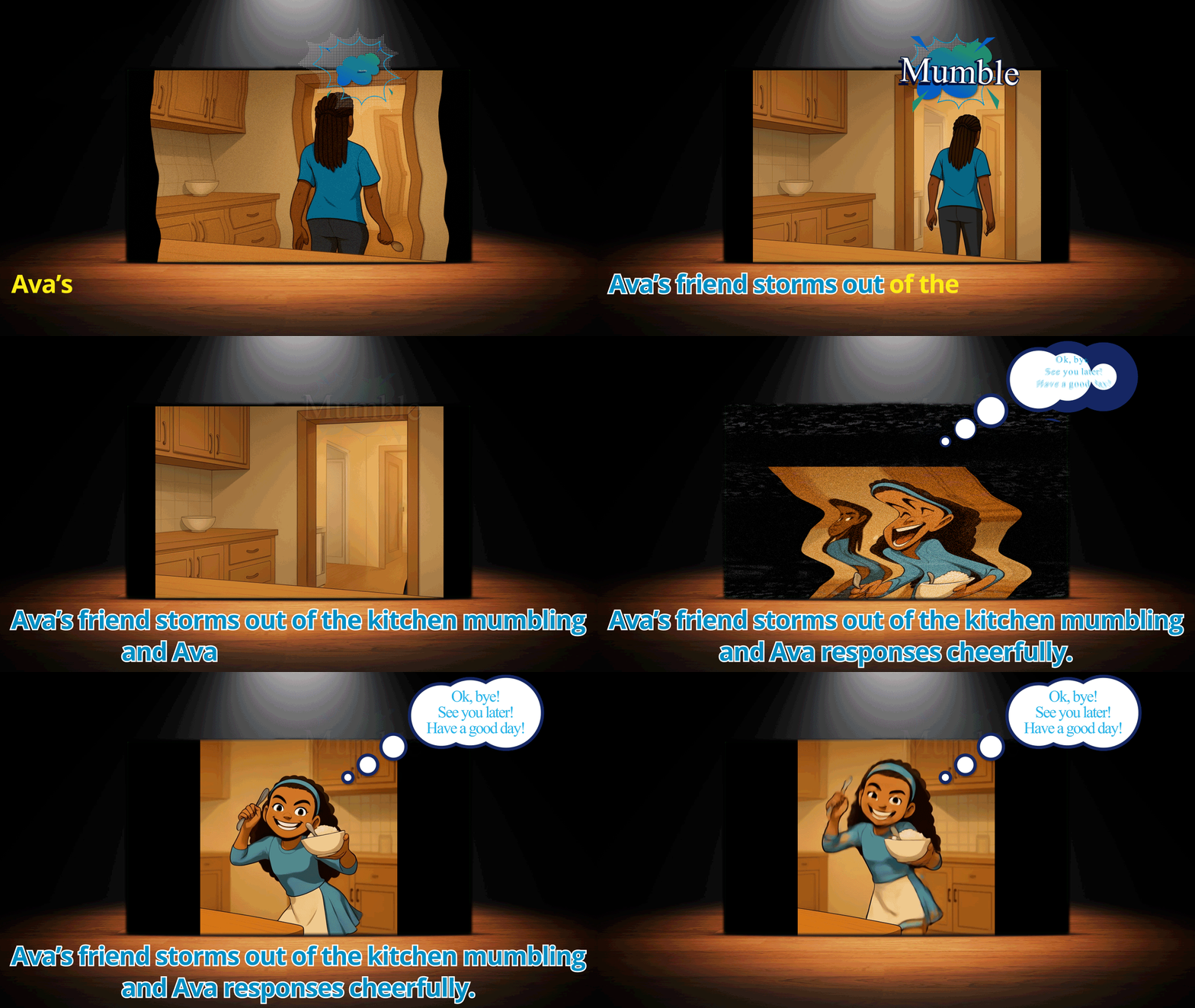
Avarice LexCinema Storyboard





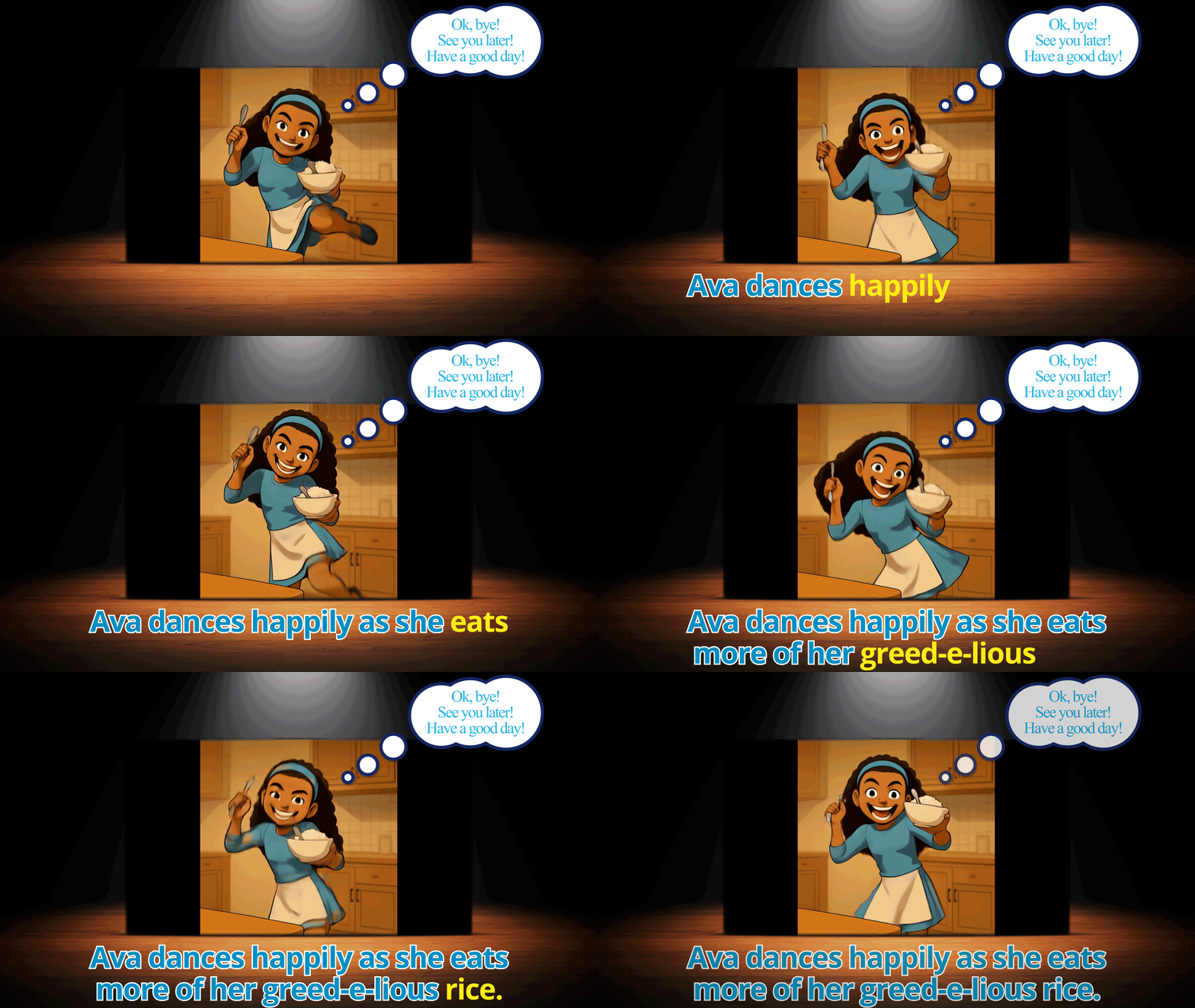


Avarice LexCinema Summary
Matters
Why
LexCinematics matters because it turns vocabulary into lived experience. Instead of memorizing definitions, learners feel meaning through story, imagery, motion, and sound. By merging semantics and etymology with cinematic techniques, LexCinematics creates definitional memory anchors that are emotional, visual, rhythmic, and narrative. Words become scenes. Concepts become characters. Meaning becomes impossible to forget. This fusion transforms vocabulary learning from passive recall into active, imaginative immersion—where every word is a world that stays with the learner.
In the heart of a warm, cartoon-style kitchen, a battle brews—not with swords, but with spoons and steaming bowls of rice. Ava, fiercely protective of her carefully prepared, famous rice, becomes the unyielding gatekeeper of culinary treasure. Her friend, driven by innocent hunger and growing desperation, attempts every stratagem—requesting, pleading, even dueling—to snag just one bite. From begging on bended knee to an epic spoon-versus-spoon showdown, their friendship is tested in hilarious, over-the-top confrontations. Tempers flare, spoons fly, and rice remains untouched—until Ava’s friend storms off, only to return with a dramatic vow under a thunderous sky: “One day… I’ll get that Ava's Rice.” This is Avarice LexCinema—a cinematic satire of greed, hunger, and epic battles between best friends, told with expressive animation and action-packed drama.